
Does Traction Relieve Arm Tingling? What to Know
Arm tingling can make ordinary tasks feel uncertain. Reaching for a seat belt, typing through a workday, carrying groceries, or sleeping on one side may trigger pins-and-needles sensations that travel from the neck or shoulder into the hand. So, does traction relieve arm tingling? For some people, carefully applied cervical traction can reduce symptoms by taking pressure off irritated structures in the neck. But it is not the right answer for every cause of tingling, and the reason behind the symptom matters.
At HealthPoint Chiropractic, the goal is not to simply chase a temporary decrease in tingling. A proper evaluation helps identify whether neck mechanics, a disc problem, muscle tension, posture, a recent accident, or another condition may be contributing to the problem. That information guides a treatment plan designed for relief and lasting improvement.
Does Traction Relieve Arm Tingling From the Neck?
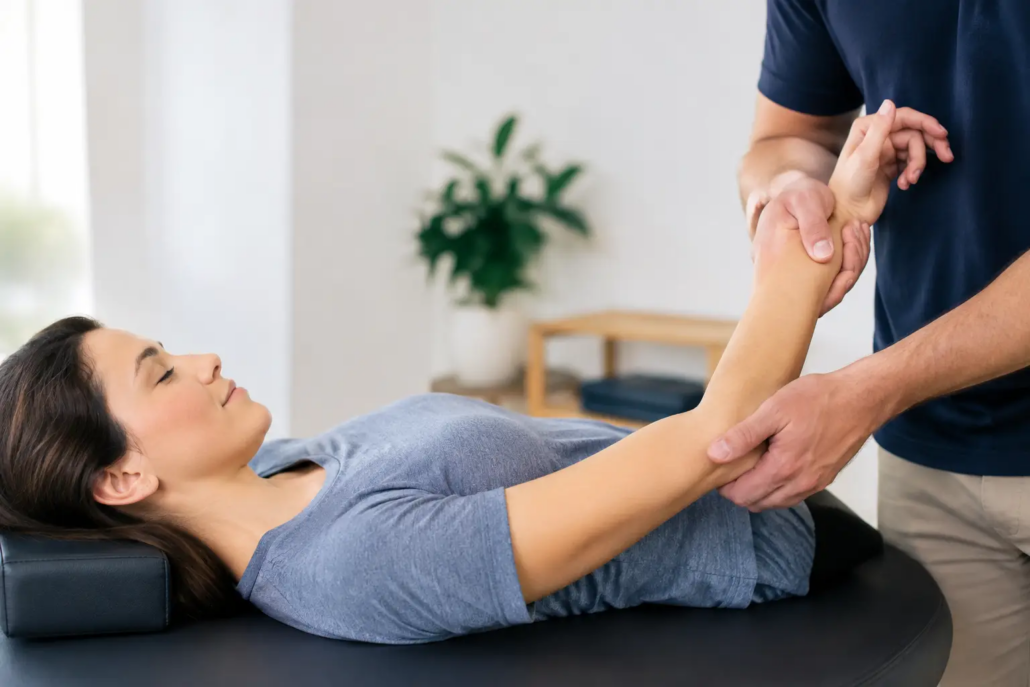
Cervical traction is a controlled, gentle pulling force applied to the neck. It may be delivered with a specialized therapy table, a traction device, or hands-on care, depending on the patient and the clinical findings. The purpose is to create a little more space between the neck vertebrae, reduce compression, and relax protective muscle guarding.
When arm tingling is related to an irritated nerve root in the cervical spine, traction may help reduce the pressure or inflammation that is sending abnormal signals down the arm. People sometimes describe less tingling, less burning, or easier movement shortly after a session. Others notice improvement only after a series of treatments combined with posture changes, corrective exercise, and chiropractic care.
Still, traction is not a cure-all. It tends to be most useful when symptoms are coming from the neck, especially when a person also has neck pain, stiffness, shoulder-blade pain, or symptoms that change with head position. If the tingling begins at the wrist, is caused by a peripheral nerve problem, or reflects a medical condition outside the spine, neck traction may offer little benefit.
Why Tingling Travels Into the Arm
Nerves exit the cervical spine and travel through the shoulder, arm, and hand. A nerve can become irritated at several points along that path. In the neck, common contributors include a bulging or herniated disc, narrowing around a nerve opening, joint irritation, degenerative changes, and strain following whiplash or another injury.
Forward-head posture can also play a role. Hours spent looking down at a phone, leaning toward a laptop, or driving with the head pushed forward can overload the neck and upper back. Over time, tight chest muscles, weak upper-back muscles, and reduced neck mobility may create an environment where symptoms persist or return.
The location of the tingling can offer useful clues, although it does not replace an examination. Symptoms into the thumb and index finger can involve a different nerve pattern than tingling in the ring finger and pinky. Numbness that appears only at night may have a different source than tingling that worsens when looking up or turning the head.
This is why a one-size-fits-all approach can miss the mark. The right treatment depends on what is irritated, where it is irritated, and how your body responds to movement and pressure.
When Cervical Traction May Be Worth Considering
Traction may be considered when an examination suggests cervical radiculopathy, a term used when a nerve root in the neck is irritated and produces symptoms into the arm. It can also be helpful for some people with disc-related neck pain, postural strain, and muscle tightness that limits normal neck motion.
A clinician will typically look at your symptom pattern, neck range of motion, reflexes, strength, sensation, posture, and the movements that make symptoms better or worse. Imaging is not needed for every case, but it may be appropriate after significant trauma, when symptoms are severe or worsening, or when there are concerning neurological findings.
The amount of traction matters. More force is not automatically better. Treatment should be comfortable, controlled, and adjusted based on your response. Some patients do better with a light intermittent pull, while others may need a different therapy entirely. If tingling sharply increases during traction or lingers worse afterward, tell your provider right away.
Traction Works Best as Part of a Plan
For many cases of neck-related arm tingling, traction is most effective as one piece of a broader rehabilitative plan. Reducing pressure is helpful, but the underlying movement habits and tissue stress still need attention.
A personalized plan may include chiropractic adjustments to improve spinal motion, soft tissue treatment or massage therapy for tight muscles, and specific exercises to strengthen the upper back and deep neck stabilizers. Posture coaching can help office workers set up a more comfortable workstation and teach commuters how to reduce strain during long drives.
Corrective exercise is particularly valuable because it gives patients an active role in recovery. The goal is not to make you dependent on repeated passive treatment. It is to improve how your neck, shoulders, and upper back support daily activities, whether you are lifting at the gym, working at a desk, caring for family, or returning to sports.
For an auto accident injury, the plan may need to account for whiplash-related joint irritation, inflammation, muscle guarding, headaches, and reduced confidence with movement. In these cases, gentle treatment progression is often more appropriate than pushing aggressively through pain.
When Arm Tingling Needs Prompt Medical Attention
Most tingling is not an emergency, but some symptoms should not wait for a routine appointment. Seek urgent medical evaluation if arm tingling is accompanied by:
- New or worsening arm or hand weakness, such as dropping objects or being unable to lift the wrist
- Trouble walking, poor balance, loss of coordination, or symptoms affecting both arms or legs
- Loss of bladder or bowel control
- Facial drooping, confusion, difficulty speaking, severe headache, chest pain, shortness of breath, or other possible stroke or heart-related symptoms
You should also be evaluated promptly after a major fall, sports collision, or auto accident, especially if neck pain and neurological symptoms begin afterward. Persistent numbness, progressive symptoms, or pain that repeatedly wakes you from sleep also deserve professional attention.
What You Can Do Between Visits
Avoid testing the problem over and over by forcefully stretching your neck or trying to crack it yourself. Aggressive self-manipulation can aggravate an already sensitive area. Instead, pay attention to positions that consistently worsen symptoms, such as prolonged looking down, sleeping with the neck twisted, or resting an elbow on a hard surface for long periods.
Use brief movement breaks during desk work. Bring screens closer to eye level, support your forearms when typing, and avoid carrying a heavy bag on one shoulder. A supportive sleep position can help as well: aim to keep the neck reasonably neutral rather than sharply bent to either side.
Heat may ease muscle tension for some people, while a short period of cold may feel better after a recent flare-up. Neither replaces an assessment when tingling continues, but both can be useful comfort measures when used appropriately.
Get Answers Before Symptoms Take Over Your Day
Arm tingling is a signal worth investigating, especially when it keeps returning, spreads farther down the arm, or changes how confidently you work and move. Cervical traction may provide meaningful relief when the neck is part of the problem, but the best results usually come from matching the treatment to the cause.
If neck pain, shoulder tension, or arm tingling is interrupting your routine in Fort Lauderdale, a focused evaluation can help clarify the next step. Getting the right care early may help you move more comfortably, protect your strength, and get back to the activities that make your day feel like your own.






Leave a Reply
Want to join the discussion?Feel free to contribute!