
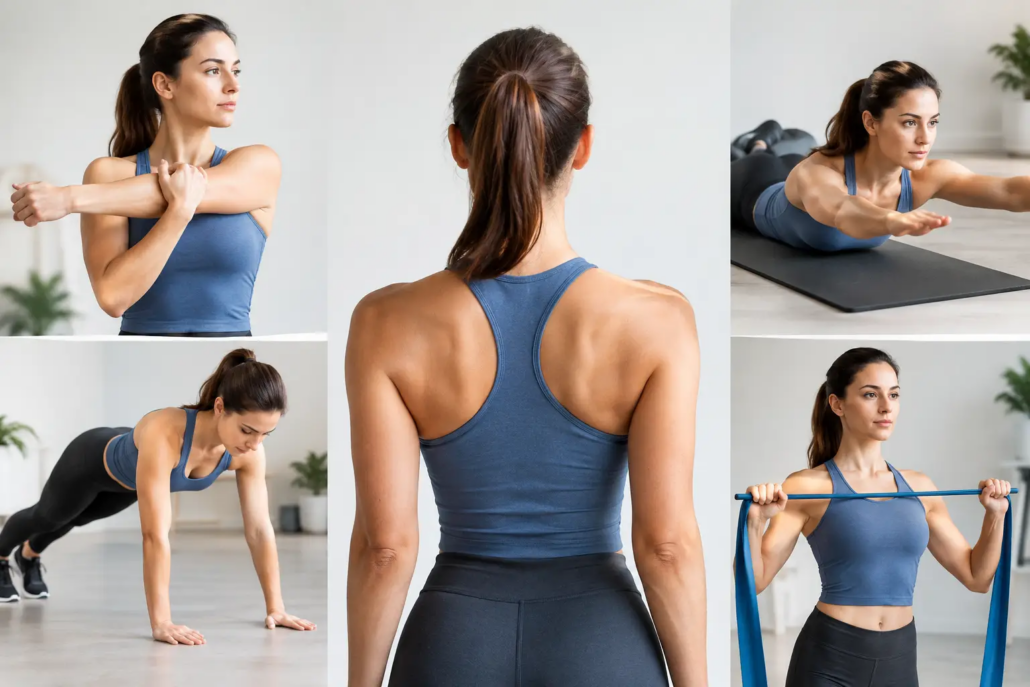
8 Best Exercises for Rounded Shoulders That Help
Your shoulders may start to round forward after hours at a desk, behind the wheel, or looking down at a phone. Then come the familiar symptoms: tightness across the chest, aching between the shoulder blades, neck stiffness, and headaches that seem to appear by the end of the day. The best exercises for rounded shoulders do more than tell you to “sit up straight.” They strengthen the muscles that support a more balanced position while improving mobility in the areas that have become tight.
Rounded shoulders are common, but they are not always just a cosmetic posture concern. When the upper back, neck, and shoulder muscles are working overtime to compensate, everyday activities such as sleeping, lifting, exercising, or working can become uncomfortable. A consistent corrective exercise routine can help, especially when it is matched to the reason your posture changed in the first place.
Why Rounded Shoulders Happen
Rounded shoulders usually involve the shoulders resting forward of their ideal position, often alongside a forward head posture and increased rounding through the upper back. This can develop gradually from prolonged sitting, repetitive work, weak upper-back muscles, limited thoracic spine mobility, or spending a lot of time in positions that keep the arms in front of the body.
The issue is not that one set of muscles is simply “bad” and another is “good.” The chest, front of the shoulders, and upper trapezius may become overactive or stiff, while the mid-back, lower trapezius, rotator cuff, and deep neck muscles may not be contributing enough. An effective plan addresses both sides of that equation.
Pain after an auto accident, a shoulder injury, arthritis, or a disc problem can also change the way you hold yourself. In those cases, forcing your shoulders back through discomfort may make matters worse. The goal is controlled movement, not rigid posture.
Before You Start Corrective Exercises
Use slow, pain-free movements. You should feel mild muscular effort or a gentle stretch, not sharp pain, tingling, numbness, dizziness, or pain traveling down the arm. If you have recent trauma, significant weakness, a history of shoulder dislocation, or persistent neck pain and headaches, get evaluated before starting a new routine.
For most people, performing these exercises three to five days a week is enough to build consistency. Start with one or two sets and increase gradually as your control improves. Good form matters more than high repetitions.
8 Best Exercises for Rounded Shoulders
1. Doorway Chest Stretch
Stand in an open doorway with one forearm resting against the frame, elbow bent about 90 degrees. Step forward slowly until you feel a stretch across the chest and the front of the shoulder. Keep your ribs stacked over your pelvis rather than arching your low back to create more range.
Hold for 20 to 30 seconds per side, then repeat two or three times. If the front of the shoulder feels pinched, lower your arm position or use a gentler stretch. This exercise helps counter the shortened position created by sitting with the arms forward.
2. Chin Tucks
Sit or stand tall with your eyes level. Gently glide your head straight backward, as if you are making a small double chin. Do not tilt your head down or force it back. Hold for three to five seconds, then relax.
Try eight to 12 repetitions. Chin tucks can help retrain the deep muscles at the front of the neck and reduce the habit of leading with the head. They are especially useful for desk workers and commuters who notice neck fatigue later in the day.
3. Wall Angels
Stand with your back near a wall, feet slightly forward. Lightly tuck your chin and bring your arms into a goalpost position. Slowly slide your arms upward and back down, keeping the movement comfortable. Your hands and elbows do not need to stay perfectly flat against the wall.
Perform six to 10 controlled repetitions. Wall angels challenge shoulder mobility and upper-back control at the same time. If your low back arches or your shoulders shrug, reduce the range of motion and move more slowly.
4. Resistance Band Rows
Anchor a resistance band at about chest height. Hold the ends with your arms extended, then pull your elbows back while gently drawing your shoulder blades toward each other and slightly downward. Pause briefly, then return with control.
Aim for 10 to 15 repetitions. Avoid pulling so far back that the shoulders roll forward at the end of the movement. Rows strengthen the mid-back muscles that help keep the shoulder blades supported during work, lifting, and daily movement.
5. Band Pull-Aparts
Hold a light resistance band in front of you at shoulder height with your palms facing down or toward each other. Keeping your ribs quiet and your shoulders relaxed, pull the band apart until your arms form a wide “T.” Return slowly.
Complete eight to 15 repetitions. This is a simple way to activate the rear shoulders and upper back, but heavier resistance is not always better. If you feel the neck tightening, use a lighter band and focus on keeping the shoulders away from your ears.
6. Prone Y Raises
Lie face down on a firm surface with your arms overhead in a “Y” shape and thumbs pointing upward. Gently lift your arms a few inches while keeping your forehead supported or your neck long. Think about reaching your arms away from you rather than squeezing hard through the neck.
Start with six to eight repetitions. Prone Y raises target the lower trapezius, an important muscle for shoulder blade control. They can be challenging, so a small lift with clean form is more valuable than a high lift with tension.
7. Thoracic Extension Over a Chair
Sit in a sturdy chair with the backrest supporting your mid-back, not your low back. Place your hands behind your head and gently lean your upper back over the chair, allowing the chest to open. Return to neutral and repeat.
Use six to 10 slow repetitions. Many people with rounded shoulders have limited movement through the thoracic spine, the middle portion of the back. Improving extension here can reduce the urge to overwork the neck and shoulders.
8. Wall Push-Ups With Plus
Stand facing a wall with your hands at chest height. Perform a controlled wall push-up. At the top, gently press yourself farther away from the wall without bending your elbows, allowing the shoulder blades to glide forward around the rib cage. Then return to the starting position.
Perform eight to 12 repetitions. The added “plus” portion helps train the serratus anterior, a muscle that supports healthy shoulder blade movement. This is often a more comfortable starting point than floor push-ups for people with shoulder stiffness or weakness.
Build a Routine You Can Maintain
You do not need to complete every exercise in one session. A practical starting routine may include the doorway stretch, chin tucks, band rows, and thoracic extensions. On another day, add wall angels, pull-aparts, Y raises, and wall push-ups. Rotating exercises can keep the routine manageable while still addressing mobility and strength.
Your workstation and daily habits matter, too. Set your screen closer to eye level, keep frequently used items within reach, and take brief movement breaks rather than holding one position for hours. Trying to hold your shoulders back all day is exhausting and usually does not last. Building stronger movement patterns is a better long-term strategy.
Progress is rarely immediate. Some people feel less tight after a few sessions, while meaningful strength and posture changes often take several weeks of regular practice. If an exercise increases symptoms for more than a day, scale it back or stop and seek guidance.
When Rounded Shoulders Need Professional Care
Exercise is helpful, but it is not the complete answer for everyone. Persistent shoulder pain, recurring headaches, numbness or tingling, reduced grip strength, pain after a car accident, or symptoms that disrupt sleep deserve a professional assessment. These signs can point to more than simple muscle tightness.
At HealthPoint Chiropractic in Fort Lauderdale, corrective exercise can be combined with chiropractic care, soft tissue treatment, massage therapy, and rehabilitation when appropriate. This integrated approach helps identify whether restricted spinal movement, muscle imbalance, injury-related guarding, or another issue is contributing to your posture and discomfort.
A better shoulder position should feel easier, not forced. Start with gentle, consistent movement, pay attention to how your body responds, and get support when pain is standing in the way of recovery.






Leave a Reply
Want to join the discussion?Feel free to contribute!