
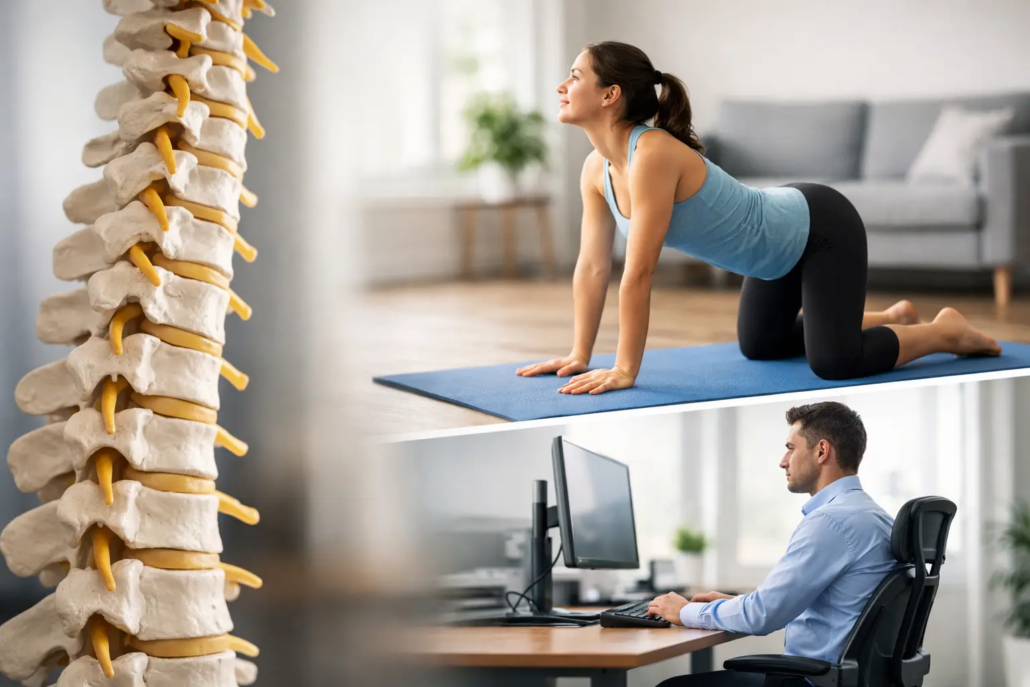
Spine Health: Daily Habits That Protect Your Back
Your spine works through nearly every part of your day: getting out of bed, checking your phone, lifting groceries, sitting in traffic, working at a desk, and sleeping. When spine health is compromised, even ordinary tasks can become painful, stiff, or exhausting. The good news is that protecting your back and neck is rarely about one perfect posture or one treatment. It is about consistent movement, smart habits, and getting the right care when pain begins to interfere with life.
For adults in Fort Lauderdale and Broward County, those habits matter even more when long commutes, desk work, fitness routines, and auto accident injuries place repeated stress on the body. A healthy spine is not a spine that never feels sore. It is one that can move, support your daily activities, and recover well from normal demands.
What Spine Health Really Means
Your spine is not just a stack of bones. It includes vertebrae, discs, joints, ligaments, muscles, and nerves that work together to support your head and trunk while protecting the spinal cord. Your neck, mid-back, and low back each have different responsibilities, which is why pain in one area can affect another.
Good spine health means maintaining enough mobility, strength, alignment, and tissue resilience to handle what your routine asks of you. That may mean sitting through meetings without neck tension, playing tennis without recurring low back pain, or lifting a child without a sharp twinge down the leg.
It also means paying attention to changes early. A stiff neck after a long flight may resolve with gentle movement and time. Pain that keeps returning, wakes you at night, travels into an arm or leg, or limits work and exercise deserves a closer look. Waiting until discomfort becomes severe can make recovery more complicated.
The Daily Habits That Affect Your Spine
Move more often, not just harder
The body generally does not respond well to long periods in one position. Sitting is not automatically harmful, but sitting still for hours can leave the hips, upper back, and neck feeling tight while reducing the natural movement your joints and muscles need.
Aim to change positions regularly. Stand up during phone calls, take a brief walk between tasks, or spend a minute gently moving your shoulders, neck, and hips every 30 to 60 minutes. These small breaks can be more realistic and more useful than trying to undo an entire day of inactivity with one intense workout.
Exercise matters, but the right type depends on your condition. Walking, swimming, controlled strength training, and mobility work can all support spinal function. If you are recovering from an injury or have persistent pain, pushing through aggressive stretches or heavy lifts may worsen the problem. A personalized plan is safer than copying a routine that worked for someone else.
Set up your work space for your body
Many neck and low back complaints start quietly at a desk. A monitor that is too low encourages forward head posture. A chair without adequate support can lead to slouching or constant shifting. Reaching forward for a keyboard or mouse may create tension through the shoulders and upper back.
Place your screen close to eye level, keep frequently used items within easy reach, and allow your feet to rest on the floor or a stable footrest. Your chair should support the natural curve of your low back, but there is no single position you must hold all day. The best desk posture is one you change regularly.
Laptop use deserves extra attention. If you work from home, at a coffee shop, or while traveling, avoid looking down at a laptop for hours. Raising the screen and using a separate keyboard when possible can reduce strain on the neck and shoulders.
Lift with preparation, not momentum
Back injuries often happen during ordinary movements, especially when fatigue, twisting, or rushing is involved. Before lifting something heavy, get close to it, keep the object near your body, brace your midsection gently, and use your legs and hips to help with the load. Avoid twisting while carrying. Instead, move your feet to turn your whole body.
There is no universal weight limit that is safe for every person. Your fitness level, prior injuries, the shape of the object, and how often you lift all matter. If an item is awkward or too heavy to control comfortably, asking for help is a practical form of injury prevention.
Treat sleep as recovery time
A poor sleeping position can leave you waking with neck pain, headaches, or low back stiffness. Your mattress and pillow do not need to be expensive, but they should keep your body reasonably supported and comfortable. A pillow that pushes the head too far forward or lets it drop too far back can aggravate the neck.
Side sleepers often feel better with a pillow that fills the space between the neck and shoulder, while back sleepers usually benefit from a pillow that supports the natural neck curve without forcing the chin toward the chest. A pillow between the knees for side sleeping or beneath the knees for back sleeping may reduce stress on the low back for some people. Comfort is a useful guide, especially if you consistently wake up feeling worse than when you went to bed.
Posture Matters, but Perfection Is Not the Goal
People often assume that posture problems come from one visible habit, such as slumping at a desk or looking down at a phone. In reality, posture is influenced by strength, mobility, work demands, stress, previous injuries, vision, and even how long you have been in the same position.
Trying to sit rigidly upright all day can create just as much tension as slouching. Instead, think of posture as a range of supported positions. Keep your head from drifting far forward for extended periods, let your shoulders relax rather than constantly pulling them back, and use movement breaks before discomfort builds.
For people who spend a lot of time on a phone, bringing the phone closer to eye level and switching hands can reduce repeated strain. For drivers, adjusting the seat so you can reach the pedals and steering wheel without leaning forward may make commutes easier on the back and neck.
When Pain Is More Than Everyday Soreness
Muscle soreness after a new workout or a long day of yard work can be normal. But recurring pain is not something you should simply accept as part of getting older or having a busy schedule. Back pain, neck pain, headaches, sciatica, numbness, and reduced range of motion may reflect joint irritation, muscle imbalance, disc-related issues, or an injury that needs directed care.
Auto accidents deserve special attention. Whiplash symptoms do not always appear immediately after a collision. Neck stiffness, headaches, dizziness, shoulder pain, or low back pain can develop later as inflammation and muscle guarding increase. Early evaluation can help document the injury and guide an appropriate recovery plan.
Seek urgent medical attention for severe pain after significant trauma, new weakness, loss of bowel or bladder control, numbness in the groin area, fever with back pain, or unexplained weight loss. These symptoms require prompt medical assessment rather than home care alone.
How Integrated Care Can Support Long-Term Spine Health
When pain persists, an adjustment-only approach may not address every factor contributing to the problem. Some patients need chiropractic adjustments to improve joint motion, while others also benefit from soft tissue treatment, massage therapy, spinal decompression, traction, corrective exercise, or guided rehabilitation. The right combination depends on the cause of pain, your health history, and your goals.
A thoughtful care plan should explain what is being treated, why it may be contributing to your symptoms, and how progress will be measured. Relief is valuable, but lasting improvement often requires rebuilding strength, improving movement patterns, and changing the habits that repeatedly overload the spine.
At HealthPoint Chiropractic, patients can receive chiropractic and rehabilitative care in one setting, with same-day appointments available for people who need help now. That integrated approach can be especially helpful after an accident, during a flare-up of sciatica, or when chronic desk-related tension has begun affecting sleep, work, or activity.
Start Before Pain Forces You to Stop
You do not need to overhaul your routine overnight to support your spine. Start by taking more movement breaks this week, adjust one part of your workstation, or replace one rushed lift with a more controlled approach. Then pay attention to how your body responds.
If pain keeps coming back or prevents you from doing what matters to you, getting clear answers is a constructive next step. Your spine supports the way you live. Give it the attention it needs before discomfort starts making decisions for you.





