
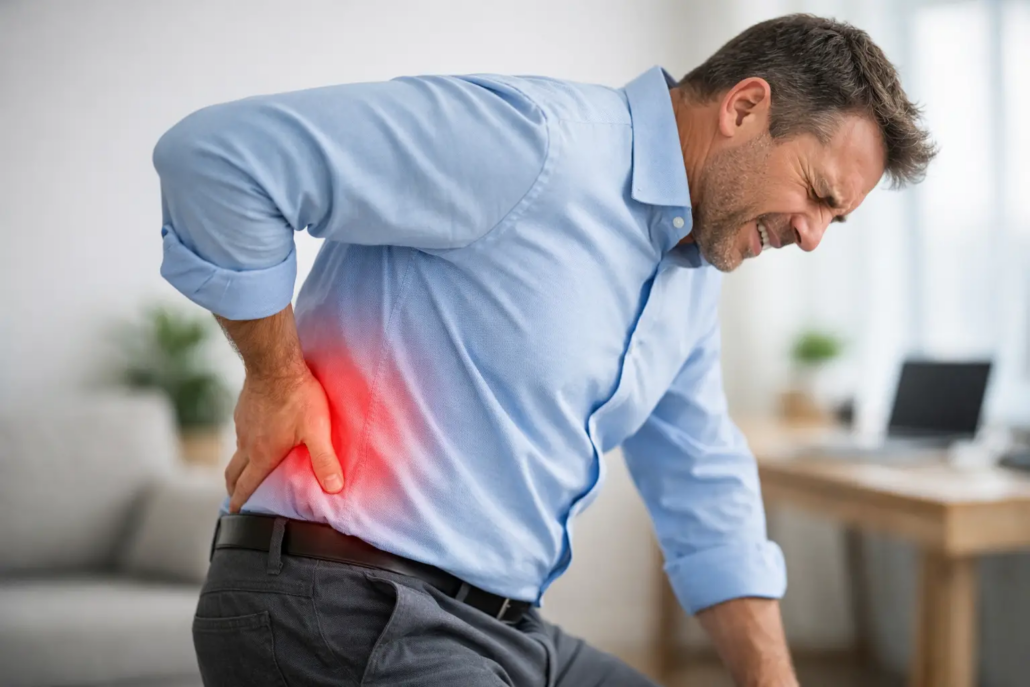
Why Does Your Lower Back Lock Up Suddenly?
A lower back “lock-up” can turn a simple movement – bending to pick up a bag, standing after a long drive, or rolling out of bed – into a sharp, frightening moment. The pain may feel like a catch, spasm, or complete inability to straighten up. If you are asking, “why does lower back lock,” the short answer is that your body may be protecting an irritated area by tightening the surrounding muscles.
That protective response is real, but it does not always reveal the exact source of the problem. A locked lower back can involve muscles, joints, discs, nerves, posture habits, or an injury that needs professional attention. Understanding the likely cause helps you respond safely instead of pushing through pain and making the episode worse.
Why Does the Lower Back Lock Up?
The lower back is built to move in several directions while supporting the weight of the upper body. When one part becomes irritated or overloaded, the nervous system may respond by tightening nearby muscles. This is often called muscle guarding or spasm.
That tightness can make the area feel stuck. You may be able to move a little, but certain motions – especially bending, twisting, standing upright, or changing positions – can trigger a sudden jolt of pain. A spasm is not always the primary problem. It is often the body’s alarm system reacting to joint irritation, a strain, a disc issue, or poor movement mechanics.
An episode can begin after one obvious event, such as lifting a heavy box with a rounded back. It can also happen after days or months of smaller stresses. Long hours at a desk, repeated commuting, weak core and hip muscles, limited mobility, and awkward sleep positions can all lower the threshold for a painful lock-up.
Common Reasons Your Back Feels Stuck
Muscle strain and protective spasm
A strained muscle is one of the most common explanations for sudden low back pain. It may occur during lifting, sports, yard work, or a quick twist. Sometimes the movement itself is minor, but the muscle was already fatigued from poor posture, lack of sleep, dehydration, or repetitive activity.
With a strain, the muscles may tighten strongly enough that standing fully upright feels impossible. The good news is that many muscle-related episodes improve with appropriate care, gentle movement, and a gradual return to normal activity. The trade-off is that aggressive stretching or forcing an adjustment while the area is highly guarded can aggravate the pain.
Irritated spinal joints
Small joints in the back, often called facet joints, help control movement between vertebrae. They can become irritated by extension, twisting, prolonged standing, or repetitive posture stress. When this happens, people often describe a sharp catch on one side of the low back or pain when leaning backward and turning.
Joint restriction and muscle guarding can feed each other. A stiff joint changes how you move, then the surrounding muscles tighten further to compensate. A careful exam can help determine whether the pattern points to a joint-related issue, a muscle problem, or something else.
Disc irritation
Spinal discs act as cushions between the bones of the spine. A disc can become irritated from repeated bending, prolonged sitting, lifting, or age-related changes. Disc-related pain may be centered in the lower back, but it can also travel into the buttock, hip, or leg.
Not every disc issue causes severe symptoms, and not every locked back means a disc is involved. However, pain that worsens with sitting, coughing, sneezing, or bending forward deserves a closer look, particularly when it comes with tingling, numbness, or leg weakness.
Sacroiliac joint or hip dysfunction
The sacroiliac joints sit where the spine meets the pelvis. They can produce pain that feels like it is in the low back, usually near one side of the beltline or into the buttock. Walking, climbing stairs, standing from a chair, or getting out of a car may be especially uncomfortable.
Hip stiffness can create a similar problem. When the hips do not move well, the lower back may be forced to do extra work during walking, squatting, and bending. This is why a complete evaluation should look beyond the exact spot that hurts.
Posture, prolonged sitting, and sudden movement
Fort Lauderdale commuters and office workers often spend hours sitting with the hips bent, shoulders rounded, and lower back unsupported. By the end of the day, the back may be stiff and the hip flexors tight. A quick reach, twist, or lift can be the final trigger – even though the underlying strain has been building for weeks.
The same pattern can affect active adults. Golf, tennis, running, strength training, and weekend projects are healthy activities, but rapid increases in training or poor recovery can overload the spine. Pain is not a sign that you should stop moving forever. It is a sign that your movement, recovery, and treatment plan may need to change.
What to Do When Your Lower Back Locks
In the first day or two, focus on reducing irritation without becoming completely inactive. Short, easy walks around the house can be better than staying in bed for hours, as long as walking does not sharply worsen your symptoms. Change positions regularly and use a supportive chair rather than slumping into a soft couch.
Cold therapy may help after a fresh strain or flare-up, especially when the area feels hot or inflamed. Gentle heat may feel better for muscle tightness and stiffness. Neither option fixes the cause by itself, but both can make movement more tolerable. Use a barrier between the pack and your skin, and limit sessions to about 15 to 20 minutes.
Avoid testing the pain repeatedly by deep bending, twisting, or trying to “pop” your own back. Do not let a friend forcefully manipulate the area. A locked back needs a thoughtful assessment, not a high-force experiment. If a motion produces sharp pain, back away from it and seek guidance.
Over-the-counter medication may be appropriate for some people, but it is not right for everyone. People with kidney disease, ulcers, blood-thinning medications, pregnancy, heart conditions, or other health concerns should ask a qualified medical professional before taking anti-inflammatory medication. Pain relief can be useful, but it should not be the only plan if symptoms continue returning.
When a Locked Back Needs Urgent Care
Most episodes of lower back lock-up are not emergencies, but certain symptoms should never be ignored. Seek urgent medical evaluation if back pain follows a major fall, car accident, or other significant trauma. The same applies if you have fever, unexplained weight loss, a history of cancer, severe abdominal pain, or pain that is constant and rapidly worsening.
Get emergency care right away for new loss of bladder or bowel control, numbness in the groin or inner thighs, or significant weakness in one or both legs. These can be signs of serious nerve compression. New pain with swelling, redness, or symptoms of illness also needs prompt medical attention.
If pain travels down the leg, causes persistent numbness, or is not improving after a few days, schedule an evaluation. Early care can help identify movement restrictions, nerve involvement, and contributing factors before they become a cycle of recurring flare-ups.
How Integrated Chiropractic and Rehabilitation Can Help
The right treatment depends on what is driving the lock-up. A chiropractor should begin with a history and examination, including how the pain started, which movements trigger it, whether symptoms travel into the leg, and how your posture, hips, and daily activities may be contributing.
For appropriate cases, chiropractic adjustments may help improve restricted joint motion and reduce mechanical stress. But an adjustment-only approach may not be enough when muscles are in spasm, soft tissues are injured, or poor movement patterns keep recreating the problem. Combining care with soft tissue treatment, massage therapy, traction or decompression when indicated, heat or cold therapy, and corrective exercise can address both immediate discomfort and the factors behind it.
Rehabilitation matters because relief and resilience are not the same thing. Once severe pain settles, guided exercises can improve core control, hip mobility, balance, and lifting mechanics. The goal is not simply to get you through today’s flare-up. It is to help you sit, work, drive, exercise, and sleep with more confidence.
At HealthPoint Chiropractic, patients in Fort Lauderdale can receive an individualized plan that combines chiropractic care and rehabilitation-based support under one roof. Same-day appointments can be especially helpful when back pain has suddenly made normal movement difficult.
Preventing the Next Lock-Up
Prevention is rarely about one perfect stretch or one “correct” posture. It is more about giving your back regular movement, adequate recovery, and better support from the hips and core. Stand up periodically during long workdays, vary your sitting position, and ease into lifting with your feet planted and the object close to your body.
If flare-ups happen repeatedly, pay attention to the pattern. Does the back lock after long drives, heavy workouts, stressful weeks, poor sleep, or certain household tasks? Those details can reveal a practical starting point for treatment and prevention.
A locked lower back can feel alarming, but it is also a useful signal to slow down and get the right answers. With a careful evaluation and a plan that fits your body and daily demands, you can move beyond temporary relief and return to the activities that make your day feel normal again.





