
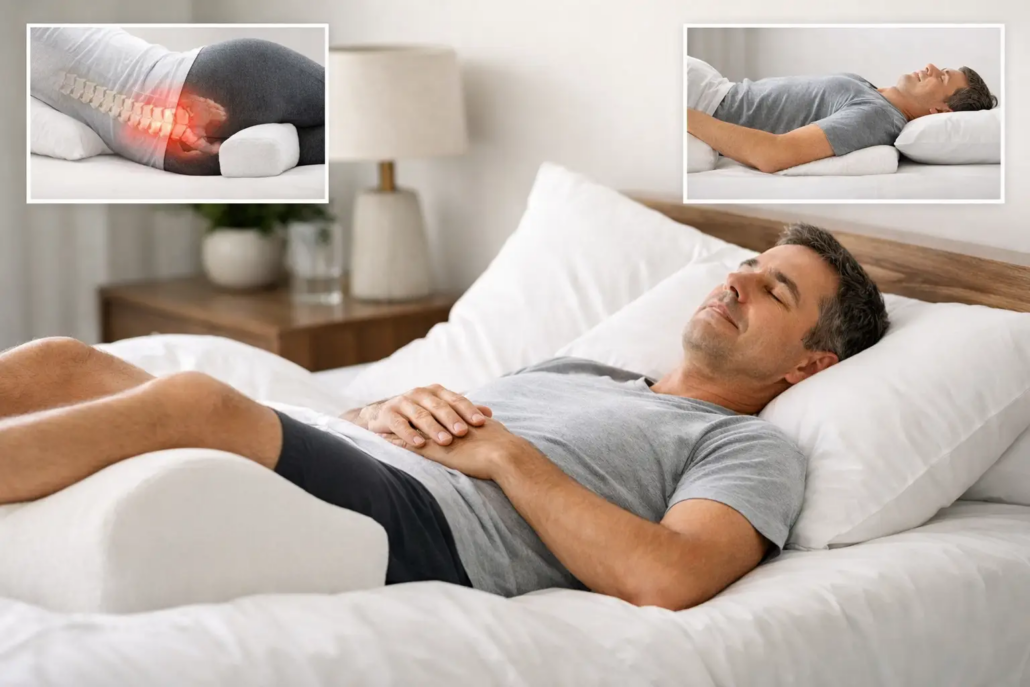
Best Sleeping Positions for Back Pain
You can get through the workday, push through a workout, and even tolerate a long commute – but when back pain keeps showing up at night, it wears you down fast. Finding the best sleeping positions back pain sufferers can actually rely on is not just about comfort. It is about reducing strain on irritated joints, discs, muscles, and nerves so your body has a better chance to recover while you rest.
For many people, sleep pain is not caused by one position alone. It is usually the combination of an underlying issue, poor support, and staying in the same posture for hours. That is why the right position can help, but it also helps to understand which tissues you may be aggravating and why one setup works better for one person than another.
Best sleeping positions back pain sufferers should try first
The most reliable position for many adults with back pain is sleeping on the back with support under the knees. This tends to distribute weight more evenly and helps reduce stress on the low back. A small pillow or rolled towel under the knees can soften the pull on the lumbar spine, especially if you wake up feeling tight or compressed.
That said, back sleeping is not perfect for everyone. If you have certain disc problems, trouble breathing comfortably on your back, or acid reflux, this position may not feel like a win. Good sleep posture should reduce pain, not create a new problem.
Side sleeping is often the next best option, especially when the knees are slightly bent and a pillow is placed between them. This can keep the pelvis more level and reduce twisting through the lower back. For people with sciatica, hip tension, or one-sided low back pain, this simple change can make a noticeable difference.
If you are a side sleeper who still wakes up sore, the issue may be that your top leg drops forward and rotates your spine during the night. A firm pillow between the knees, and sometimes one between the ankles, can help maintain better alignment.
A modified fetal position may help some people with disc-related pain, particularly if bending forward feels relieving. The key word is modified. Curling up too tightly can leave the back and hips stiff by morning. Think gentle bend, not full tuck.
Positions that can make back pain worse
Stomach sleeping is usually the hardest on the spine. It often forces the low back into more extension and the neck into rotation for long periods. That combination can increase joint irritation, muscle tension, and morning stiffness.
Some stomach sleepers are not going to change overnight, and that is realistic. If that is you, putting a thin pillow under the pelvis may reduce some lower back strain. Using a very flat pillow or no pillow under the head may also help limit neck stress. It is not the ideal setup, but it can be a step in the right direction.
Sleeping with one leg thrown high over a body pillow or twisting heavily through the trunk can also aggravate symptoms. These positions may feel comfortable for a few minutes but create prolonged asymmetry over several hours. If you regularly wake up with pain stronger on one side, your sleep posture may be part of the reason.
How to choose the best sleeping position for your type of pain
Not all back pain behaves the same way. Muscle strain, joint irritation, sciatica, degenerative changes, and disc injuries can respond differently to the same position.
If your pain feels like general low back tension or stiffness, back sleeping with support under the knees or side sleeping with a pillow between the knees are usually good starting points. These positions reduce unnecessary rotation and can help the back muscles relax.
If your pain shoots into the buttock or leg, side sleeping often works better than flat back sleeping, especially if you support the knees well and avoid twisting. Sciatic irritation tends to flare when the low back and pelvis are under uneven tension.
If you have pain that feels worse with standing upright but better when leaning forward, a slightly curled side-lying position may feel more comfortable. On the other hand, if sitting and bending make you worse, too much flexion during sleep may not be ideal.
This is where the trade-off matters. A position that helps one condition may aggravate another. The best sleeping positions for back pain depend on the pattern of your symptoms, not just a general rule from the internet.
The pillow setup matters more than most people think
People often focus on the mattress and forget that pillows are what hold the spine in position for hours. Even the best sleep posture can fail if the head, neck, hips, or knees are poorly supported.
If you sleep on your back, your pillow should support the natural curve of your neck without pushing your head too far forward. If your chin is tucked toward your chest all night, your upper back and neck can tense up and change the mechanics lower down the spine as well.
If you sleep on your side, the pillow needs enough height to fill the space between your shoulder and head. Too flat, and your neck drops sideways. Too high, and the neck bends the opposite way. Both can contribute to tension that travels down the back.
Knee pillows are useful because they keep the pelvis from rolling. For some people, hugging a pillow in front also reduces upper body rotation and makes side sleeping more stable.
What about the mattress?
There is no single mattress that works for every painful back. In general, a mattress that is too soft lets the body sag, while one that is too firm can create pressure points and prevent the spine from settling into a neutral position.
Medium to medium-firm tends to be the safest middle ground for many adults. But body type matters. A lighter person may feel fine on a softer surface, while a heavier person may need more support to avoid sinking too deeply.
If you wake up sore but improve once you start moving, your mattress may be part of the problem. If you hurt in every position and the pain is lingering into the day, the issue may go beyond sleep setup and point to an underlying mechanical problem that needs treatment.
When sleep position is not enough
Sleep adjustments can reduce stress on the back, but they do not correct the root cause of pain on their own. If your discomfort keeps coming back, if you are waking nightly, or if pain shoots into the leg, causes numbness, or limits movement during the day, it is time to look deeper.
Persistent back pain often involves more than one factor. Joint restriction, muscle guarding, disc irritation, poor posture, deconditioning, and old injuries can all feed into the cycle. That is why many patients do better with a combination of hands-on care and guided rehabilitation instead of trying to fix everything with a pillow change.
At HealthPoint Chiropractic, that often means identifying what is driving the pain pattern first, then using a personalized plan that may include chiropractic adjustments, soft tissue treatment, corrective exercise, decompression, and other supportive therapies. The goal is not just to help you sleep better tonight, but to help your back function better long term.
Signs you should get your back pain evaluated
If your pain lasts more than a couple of weeks, repeatedly wakes you from sleep, or gets worse despite changing positions, it deserves professional attention. The same is true if pain began after a car accident, lifting injury, or sudden twist.
You should also take nighttime pain seriously if it comes with numbness, tingling, leg weakness, balance changes, or major morning stiffness that does not ease up. These signs do not always mean something severe, but they do mean your back needs a closer look.
The good news is that many sleep-related back pain problems respond well to conservative, non-surgical care when addressed early. The sooner the cause is identified, the easier it usually is to reduce irritation and restore better movement.
A better sleep position can absolutely help. So can the right pillow and a supportive mattress. But if you are still waking up stiff, guarding every turn, or dreading the night because of pain, listen to that signal. Your body may be asking for more than a different position – it may be asking for real care.