How Spinal Traction Works for Back Pain
Back pain often feels worse when you have been sitting too long, driving too much, or trying to sleep in one position without finding relief. That is where understanding how spinal traction works can make a real difference. For many people dealing with disc problems, nerve irritation, sciatica, or stubborn neck and low back pain, traction is not about forcing the spine into place. It is about creating the right kind of gentle pull to reduce pressure, improve movement, and help injured tissues calm down.
What spinal traction is actually doing
Spinal traction is a treatment designed to apply a controlled stretching force to the spine. The goal is simple – create a small amount of space between spinal segments so compressed joints, discs, and nerves have less stress on them.
That sounds straightforward, but the effect can be meaningful. When the spine is under constant load from poor posture, repetitive bending, prolonged sitting, old injuries, or muscle guarding, pressure can build around discs and joints. Traction helps reduce that pressure in a measured way. In the right patient, that can ease pain, improve mobility, and make it easier for the body to heal.
This is why traction is often used as part of a broader care plan rather than as a stand-alone fix. If a painful disc, stiff joints, weak stabilizing muscles, and poor posture are all part of the problem, the best results usually come from treating all of those pieces together.
How spinal traction works inside the spine
When traction is applied correctly, the spine is gently elongated. That can lower compressive forces on the discs, facet joints, and nearby nerve roots. For someone with disc-related pain, that reduction in pressure may help decrease bulging stress on the injured area and reduce irritation to the surrounding nerves.
There is also a muscular effect. Pain tends to make muscles tighten up to protect the area. Unfortunately, that guarding can increase stiffness and make movement more painful. Traction can help those muscles relax by reducing the load they are bracing against. Less muscle tension often means less pain with standing, walking, turning, or getting out of bed.
Fluid movement matters too. Discs do not have a large direct blood supply, so they rely on movement and pressure changes to exchange nutrients and waste. A carefully controlled traction session may support that process by changing the mechanical forces on the disc. It is not a magic reset, but it can create a better environment for recovery.
Why people feel pain relief during or after traction
Pain relief from traction usually comes from one or more of three changes happening at the same time. First, pressure on irritated nerves may decrease. Second, overworked muscles may begin to let go. Third, restricted joints may move more freely.
That is why traction can feel different from a standard stretch at home. It is not just pulling on muscles. It is a targeted mechanical treatment aimed at changing the way force is distributed through the spine.
For some patients, relief happens quickly. They may notice less radiating leg pain, less neck tightness, or easier movement after only a few sessions. For others, progress is more gradual. If the issue has been building for months or years, the body usually needs time and repetition to respond.
Conditions that may respond well to spinal traction
Traction is commonly used for disc injuries, sciatica, pinched nerves, some cases of neck pain, low back pain, and pain related to spinal compression. It can also help certain patients recovering from an auto accident, especially when muscle tension and joint restriction are contributing to the problem.
That said, it depends on the cause of the pain. Traction may be helpful when symptoms are tied to compression, disc stress, or nerve irritation. It may be less useful when pain is driven mainly by instability, inflammatory conditions, certain advanced structural changes, or issues outside the spine entirely.
This is one reason a proper exam matters. Two people can both say, “My back hurts,” while needing very different treatment approaches.
How spinal traction works as part of a treatment plan
The best traction results usually come when it is combined with other therapies that support the spine before and after the session. If traction reduces pressure but weak muscles and poor movement patterns stay the same, symptoms often return.
That is why integrated care matters. A patient might receive traction to reduce disc and nerve stress, chiropractic adjustments to improve joint motion, soft tissue treatment to reduce muscle tension, and corrective exercise to build support around the spine. In a setting like HealthPoint Chiropractic, that combination helps connect short-term relief with longer-term correction.
Think of traction as creating an opportunity. It can reduce the forces aggravating the area, but the body still needs help stabilizing and moving well afterward.
What a traction session usually feels like
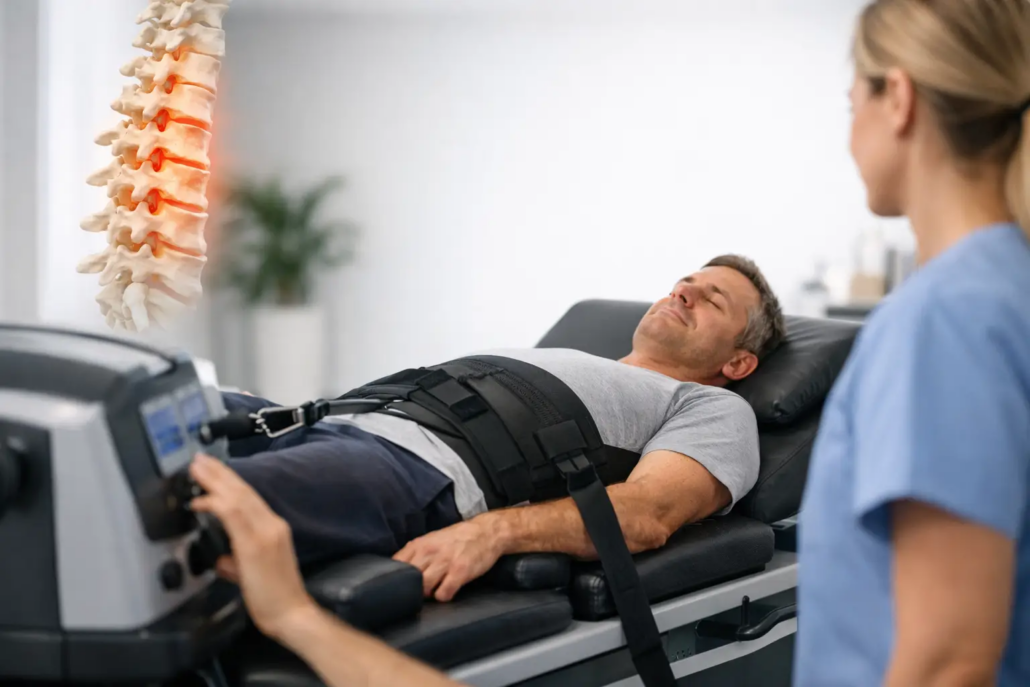
Most patients are surprised by how gentle traction feels. Depending on the area being treated, you may lie on a specialized table while the doctor applies a controlled pulling force to the neck or lower back. Some systems use intermittent cycles of pull and relaxation. Others maintain a steady decompressive force for a set period.
A good session should feel controlled and comfortable, not aggressive. Many people describe a sense of stretching, release, or reduced pressure. If traction increases sharp pain, causes new symptoms, or feels too intense, the setup should be adjusted.
This is another reason supervision matters. The amount of force, angle, duration, and body position all affect the outcome. More traction is not always better. The right traction is better.
Cervical traction for neck pain
When traction is applied to the cervical spine, the goal is often to reduce pressure in the neck and around the nerves that may be contributing to pain, stiffness, headaches, or symptoms traveling into the shoulder and arm. Patients with desk posture strain or whiplash-related tension may benefit when traction is used appropriately.
Lumbar traction for low back pain and sciatica
For the lumbar spine, traction is commonly used to address low back pain, disc irritation, and nerve symptoms that travel into the buttock or leg. In some cases, reducing compressive load in the lower back can make standing and walking more tolerable and help calm a flare-up.
Who should be cautious with traction
Spinal traction is not for everyone. Certain conditions may make it inappropriate or require close modification, including fractures, severe osteoporosis, some post-surgical cases, spinal instability, active inflammatory disease, or other serious underlying medical issues.
That is why traction should not be treated like a one-size-fits-all device or internet hack. What helps one person may aggravate another. A careful evaluation helps determine whether traction is a smart option, which area should be treated, and how it should be dosed.
Why personalized care matters more than the machine
People often ask whether one type of traction table is better than another. The truth is that the equipment matters less than the clinical judgment behind it. A high-tech device is only useful when the diagnosis is accurate and the settings match the patient.
The real question is not, “What machine do you use?” It is, “Why is traction right for my condition, and what are we pairing it with to help me stay better?”
That mindset matters because pain relief is only part of the job. If your work posture, core weakness, movement habits, or injury mechanics are still feeding the problem, symptoms can keep cycling back.
What to expect after treatment
After traction, some patients feel looser right away. Others notice changes over the next several hours, such as less radiating pain, easier movement, or reduced pressure in the neck or back. Mild soreness can happen, especially early on, as the body adapts to different movement and muscle tension patterns.
The goal is not just to feel better on the table. The goal is to carry that relief into daily life – getting through work more comfortably, sleeping better, driving with less pain, exercising with more confidence, and moving without guarding every step.
If you have been dealing with back pain, neck pain, sciatica, or disc-related symptoms, traction may be one useful part of your recovery. The key is making sure it is matched to the real cause of the problem and supported by a plan that helps your spine stay strong, mobile, and stable. The right treatment should not leave you guessing. It should help you feel better and understand why you are improving.