
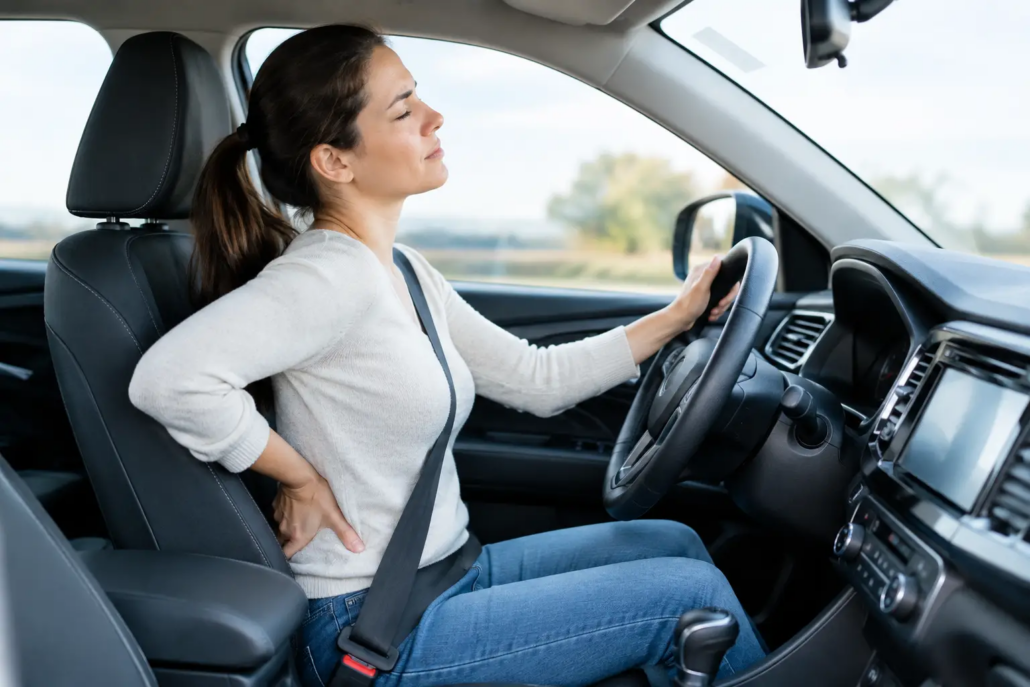
How to Relieve Back Pain While Driving Safely
Your back may feel fine when you leave home, then start aching before you reach downtown Fort Lauderdale, I-95, or your office parking lot. Learning how to relieve back pain driving starts with understanding what happens in the driver’s seat: your body stays in one position, your hips tighten, road vibration adds stress, and small posture problems can build into major discomfort.
For some people, the pain is a dull ache across the low back. For others, it travels into the buttock or leg, causes stiffness after a commute, or makes getting out of the car difficult. You do not have to accept that pain as part of your daily drive. A few practical adjustments can reduce strain, while professional care can address the underlying spinal, muscle, or nerve irritation that keeps the problem returning.
Why Driving Can Trigger Back Pain
Driving is more demanding on the spine than it appears. Sitting places pressure on the discs in the lower back, especially when the pelvis rolls backward and the natural curve of the lumbar spine flattens. Reaching too far for the steering wheel, sitting too low, or leaning toward one side compounds that pressure.
South Florida commuters also deal with stop-and-go traffic. Constant braking and accelerating can tense the hip flexors, glutes, and lower back. If you already have poor posture, a previous auto injury, sciatica, a disc issue, or weak core muscles, even a 20-minute drive may aggravate symptoms.
The cause is not always the same. A seat adjustment may help someone with simple muscle fatigue, while pain that shoots below the knee may need a more thorough evaluation for nerve involvement. The goal is relief now, but also a plan that helps prevent the next commute from setting off the same pain.
Set Up Your Seat to Relieve Back Pain While Driving
Your car seat should support you, not force you to hold yourself up. Start by moving the seat close enough that you can press the pedals without fully straightening or straining your leg. Your knees should remain slightly bent, with your hips level with or a little higher than your knees when possible.
Raise the seat so you can see clearly over the steering wheel without lifting your shoulders. Then adjust the seatback to a comfortably upright position. Reclining too far may feel relaxed at first, but it makes you reach forward and places more strain on the neck and low back.
Bring the steering wheel toward you if your vehicle allows it. You should be able to hold it with bent elbows and relaxed shoulders. If your arms are locked straight, your upper back and neck will often compensate.
Support the Natural Curve of Your Low Back
Many vehicle seats do not provide enough lumbar support. If your car has an adjustable lumbar feature, use it gently so it fills the small curve in your lower back without pushing aggressively. If it does not, a small lumbar cushion or even a rolled towel placed at belt level can help maintain a more neutral position.
Do not use a support that is too thick. Excess pressure can force your back into an uncomfortable curve and create a new source of pain. The right support should feel subtle, not dramatic.
Check Your Wallet, Phone, and Pockets
Sitting on a thick wallet, keys, or phone tilts the pelvis and can irritate the muscles and nerves around the low back and hips. Empty your back pockets before a longer drive. It is a simple change, but it can make a noticeable difference for people who consistently feel pain on one side.
Move Before Pain Builds Up
The body is not designed to stay still for long periods. On a longer drive, plan to get out and walk for a few minutes every 45 to 60 minutes when it is safe and practical. A brief movement break can reduce stiffness, improve circulation, and give tight hip muscles a chance to release.
At a stop, avoid forceful twisting or stretching in the driver’s seat. Instead, reset your posture: sit back fully, relax your shoulders, and gently engage your abdominal muscles as though preparing for a light cough. This can help prevent slumping without making your body rigid.
Before leaving home or work, spend a minute standing tall and taking a short walk. If your back is already tight, getting directly into the car may make the first part of the drive more uncomfortable. Gentle movement is usually more useful than trying to stretch aggressively through pain.
Reduce Strain Outside the Car Too
A painful commute is often connected to what happens before and after it. Hours at a desk can leave the hip flexors shortened and the upper back rounded. Lifting groceries with poor form, sleeping in an unsupportive position, or returning to exercise too quickly after an injury can also make driving less tolerable.
Corrective exercise can be valuable when weakness, poor mobility, or postural imbalance is part of the problem. The right program depends on your symptoms and physical condition. Some people need to build core and glute strength; others need mobility work, soft tissue treatment, or a period of reduced activity while an irritated area calms down.
Heat may ease muscle tightness before a drive, while cold therapy may help after activity if the area feels inflamed or sore. Neither is a substitute for identifying the cause of recurring pain, but both can be useful parts of a personalized recovery plan.
When Back Pain While Driving Needs Professional Care
If you are repeatedly changing positions, avoiding trips, or arriving at work already in pain, it is time to look beyond seat adjustments. Persistent back pain can involve spinal joint restriction, muscle spasm, disc irritation, poor movement patterns, or nerve pressure. After an auto accident, even a low-speed collision can create injuries that become more noticeable days later.
Chiropractic care can help restore spinal motion and reduce mechanical stress on the back. At HealthPoint Chiropractic, care may also include massage therapy, traction or spinal decompression, soft tissue treatment, rehabilitative exercise, and posture-focused guidance. Combining these approaches can be more effective than relying on an adjustment alone when muscles, mobility, and everyday habits are all contributing to pain.
A thorough evaluation matters because not every kind of back pain should be handled the same way. Care should account for your symptoms, health history, driving demands, and goals, whether you commute across Broward County, drive for work, or simply want to get through errands without discomfort.
Do Not Ignore These Warning Signs
Seek prompt medical attention if back pain follows a serious accident or comes with new weakness in a leg, numbness in the groin area, loss of bladder or bowel control, fever, unexplained weight loss, or severe pain that does not improve with rest. These symptoms can signal a condition that needs urgent evaluation.
For less urgent but persistent symptoms, early care can still make a meaningful difference. Waiting until pain becomes constant may allow compensations in the hips, shoulders, and neck to become harder to correct.
Your vehicle should get you where you need to go, not leave you stiff, sore, and limited when you arrive. Start with a better seat setup and regular movement, then get evaluated if pain continues. The right combination of hands-on care, rehabilitation, and practical posture changes can help make driving feel manageable again – and help you stay active long after you park.





