
Does Traction Help Nerve Pain? What to Know
A sharp, electric pain running from your low back into your leg can make sitting at work, driving through Fort Lauderdale traffic, or getting comfortable in bed feel nearly impossible. So, does traction help nerve pain? For some people, carefully applied spinal traction can reduce pressure around irritated nerve structures and provide meaningful relief. But it is not a one-size-fits-all treatment, and the reason for the nerve pain matters.
Traction is often most helpful when nerve symptoms are connected to spinal compression, disc irritation, or narrowed spaces around a nerve root. The goal is not simply to stretch the back or neck. It is to create gentle, controlled separation between spinal segments so irritated tissues have more room and the body can begin to move more comfortably.
What nerve pain can feel like
Nerve pain is different from a sore muscle after a workout. It may feel burning, tingling, numb, sharp, shooting, or electric. In the low back, nerve irritation can travel into the buttock, thigh, calf, or foot. This pattern is often associated with sciatica, though several conditions can cause similar symptoms.
In the neck, an irritated nerve may send pain, numbness, or tingling into the shoulder, arm, hand, or fingers. Some people notice weakness when gripping objects, lifting an arm, or climbing stairs. Symptoms can also worsen with certain positions, such as prolonged sitting, bending, looking down at a phone, or turning the head.
The key question is not only where the pain travels. It is what is causing the nerve to become irritated in the first place. A disc bulge, disc herniation, joint changes, muscle tension, poor posture, injury-related inflammation, or spinal narrowing can all play a role.
Does traction help nerve pain caused by a disc problem?
It can. Spinal traction may be especially useful when a disc-related condition is contributing to nerve root irritation. Discs sit between the bones of the spine and help absorb force during movement. When a disc becomes inflamed, bulges, or herniates, it can irritate a nearby nerve and create radiating pain.
By applying a measured pulling force, traction may reduce compressive stress on the involved spinal area. Some patients feel less pressure, easier movement, and a reduction in pain that travels down an arm or leg. Others notice that numbness or tingling becomes less frequent over a series of treatments.
Results vary. A larger disc herniation, severe inflammation, longstanding nerve damage, or multiple sources of pain may require a broader treatment plan. Traction is most effective when it is selected after a proper examination rather than used as a generic answer for every back or neck problem.
How spinal traction works
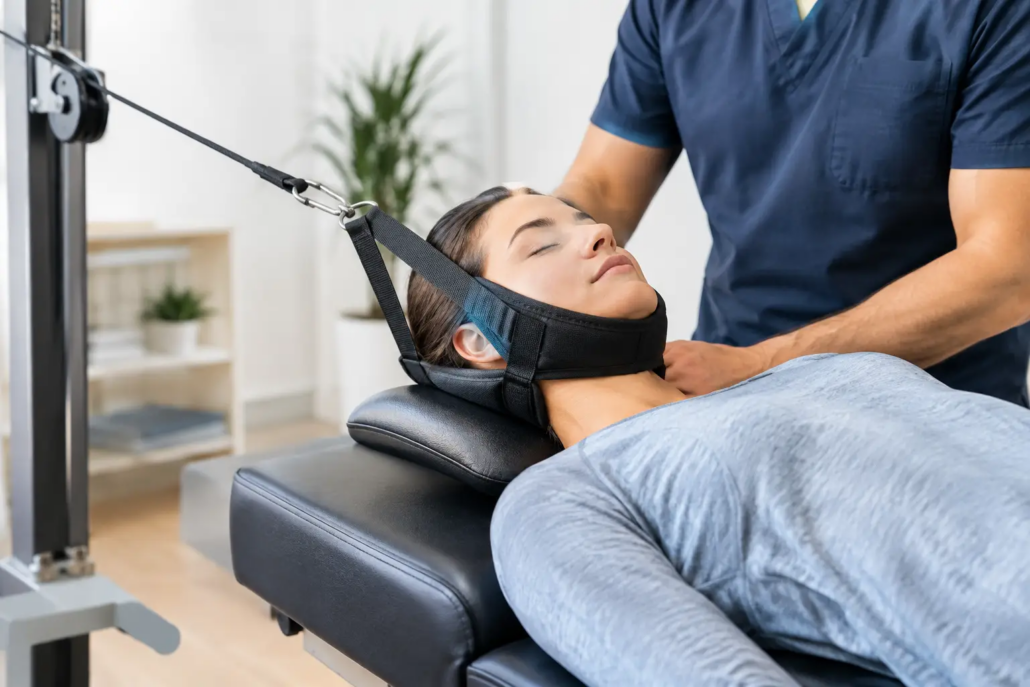
Spinal traction can be performed manually by a clinician or through specialized equipment. In a clinical setting, the patient is positioned comfortably while a controlled force is applied to the neck or lower back. The amount of force, angle, duration, and number of sessions should be tailored to the patient’s condition, tolerance, and response.
Spinal decompression is a more specific form of mechanical traction that uses gradual cycles of pull and release. These cycles are intended to reduce guarding in the muscles and allow the spine to respond without abrupt force. For patients with disc-related discomfort, this approach may be more comfortable than sustained pulling.
A session should not feel aggressive. Mild stretching or a sense of pressure can be normal, but increasing sharp pain, spreading numbness, or worsening symptoms should be addressed immediately. Good care means adjusting the approach based on what your body is telling the provider.
When traction may be a good fit
Traction is commonly considered for people with radiating pain related to sciatica, cervical radiculopathy, disc irritation, or certain types of spinal stenosis. It may also be useful after an injury when muscle guarding and altered movement patterns are adding pressure to an already irritated area.
Office workers who spend long hours seated, commuters who feel pain after driving, and active adults whose symptoms flare during lifting or training may benefit when traction is paired with posture correction and rehabilitative exercise. The same applies to some auto accident patients, particularly when neck or back pain is accompanied by arm or leg symptoms.
Still, the diagnosis matters more than the treatment name. For example, traction may help one person with leg pain from a lumbar disc issue, while another person with leg pain from hip arthritis, peripheral neuropathy, or a vascular condition needs a different plan entirely.
When traction is not the right choice
Traction is not appropriate for every patient. Certain fractures, spinal instability, severe osteoporosis, active infection, some inflammatory conditions, and some cancers affecting the spine require different medical management. Pregnancy, recent surgery, and advanced degenerative changes may also require modifications or a different treatment approach.
It is also not a substitute for urgent care when red flags are present. Seek prompt medical attention for new bowel or bladder control problems, numbness in the groin or saddle area, rapidly worsening weakness, severe unrelenting pain after major trauma, fever with back pain, or unexplained weight loss. These symptoms need timely medical evaluation.
Even without emergency warning signs, progressive weakness or persistent numbness deserves a thorough assessment. The goal is to identify what is irritating the nerve before symptoms become more limiting.
Why traction works best as part of a plan
Traction can create an opportunity for relief, but lasting progress usually requires more than passive treatment. Once pain begins to settle, the spine and surrounding muscles need support to move and function better in daily life.
At HealthPoint Chiropractic, traction or spinal decompression may be combined with chiropractic adjustments, soft tissue treatment, massage therapy, corrective exercise, and rehabilitation when appropriate. This integrated approach can address restricted movement, muscle tension, poor mechanics, and weakness that may be contributing to recurring nerve irritation.
For example, someone with sciatica may need traction to calm a sensitive nerve root, gentle mobility work to restore movement, and progressive core and hip exercises to improve support during sitting, lifting, and walking. Someone with neck-related arm symptoms may benefit from cervical traction along with posture-focused care and exercises that reduce strain from desk work or phone use.
The order matters. Pushing into difficult exercises too early can aggravate a sensitive nerve. On the other hand, relying only on passive care without rebuilding strength and movement habits can leave the underlying problem unresolved. A personalized plan balances relief with recovery.
What results should you expect?
Some patients notice a change after the first few sessions, especially if their symptoms are position-dependent and related to acute compression or muscle guarding. Others improve gradually over several weeks as inflammation settles and movement becomes easier.
Progress is not always perfectly linear. A patient may feel better, overdo an activity, and have a temporary flare. That does not automatically mean the treatment failed. It can be useful feedback about how much loading the body can currently tolerate and what needs to be adjusted.
A good treatment plan sets clear goals beyond pain scores. These may include sitting through a workday with less discomfort, sleeping more comfortably, returning to exercise, driving without leg pain, or lifting without fear of a flare-up. As symptoms improve, care should evolve toward helping you maintain those gains.
The right next step for radiating pain
If pain, tingling, or numbness is traveling into an arm or leg, do not assume you have to live with it or rely only on medication. An examination can help determine whether traction is likely to help nerve pain in your specific case and whether chiropractic care, rehabilitation, or another referral is the safer next step.
Relief often begins with understanding the cause, then choosing treatment that fits your condition and your life. With the right plan, many people can move with more confidence, return to the activities they miss, and give an irritated nerve the time and support it needs to settle.






Leave a Reply
Want to join the discussion?Feel free to contribute!