
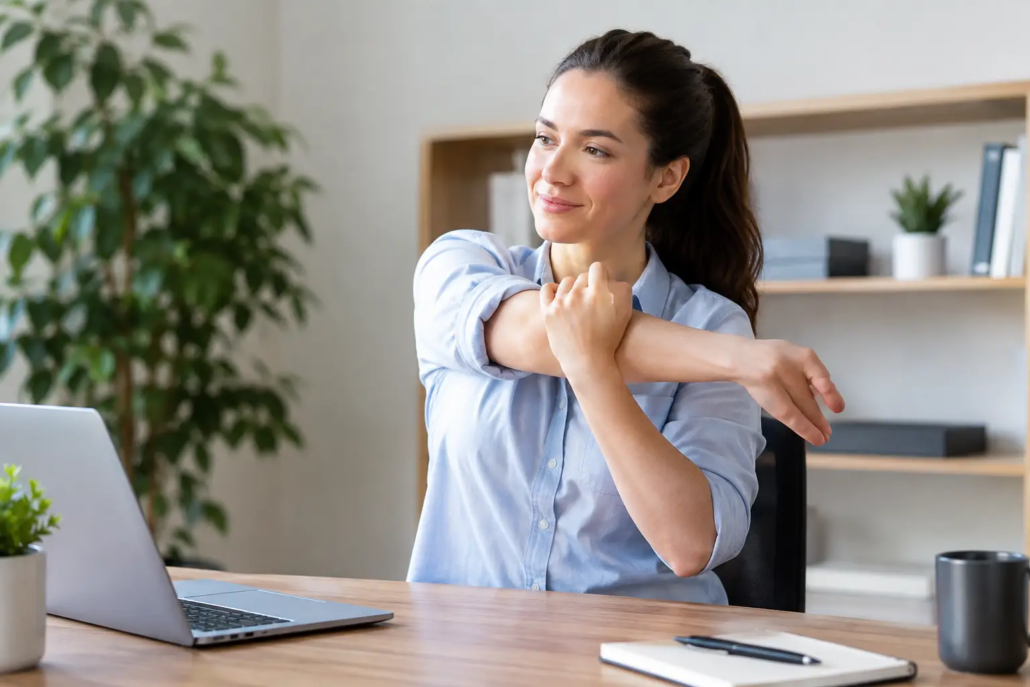
Desk Stiffness Remedies That Actually Help
That familiar feeling of standing up from your desk and needing a few seconds to straighten out is more than an annoyance. Desk stiffness remedies can help relieve the tight neck, aching low back, rounded shoulders, and sore hips that build up when your body stays in one position for too long. The goal is not to find one magic stretch. It is to reduce the daily strain on your muscles and joints while addressing the movement and posture habits that keep bringing the stiffness back.
For many Fort Lauderdale professionals, long commutes, computer-based work, and phone use create a full day of sitting before exercise or recovery even gets a chance. A few smart changes can make a real difference. If pain is persistent, spreading, or limiting your routine, a personalized evaluation can help identify what is driving the problem.
Why Desk Work Creates Stiffness
Your body is designed to move often, not to hold a perfect posture for eight hours. When you sit at a desk, the muscles at the front of the hips can stay shortened, while the glutes do less work. Your upper back may round forward, and your head may drift in front of your shoulders as you look at a monitor or laptop. Over time, the neck, upper back, and low back muscles work harder to keep you upright.
Stiffness is often the result of this accumulated load. It can feel worse after a busy workday because muscles have been maintaining low-level tension for hours. A poorly positioned screen, chair, keyboard, or phone can increase that tension, but even an excellent workstation cannot cancel out too much uninterrupted sitting.
There is also a difference between ordinary stiffness and pain that needs attention. Mild tightness that improves after walking or gentle movement may respond well to simple daily changes. Sharp pain, numbness, tingling, weakness, pain traveling into an arm or leg, or symptoms after an auto accident deserve professional care. These signs can point to irritation beyond routine muscle tension.
Desk Stiffness Remedies You Can Start Today
The most effective approach combines frequent movement with a workspace that asks less of your body. Start small and stay consistent. Ten minutes of stretching once a week will not offset long periods of stillness, but brief movement breaks throughout the day can.
Change Positions Before You Feel Stuck
Set a reminder to stand, walk, or change position every 30 to 60 minutes. You do not need a long workout break. Refill your water, take a short walk down the hall, stand during a phone call, or do a few slow bodyweight movements beside your desk.
Try gently rolling your shoulders backward, turning your head slowly from side to side, and opening your chest by bringing your arms behind you without forcing the stretch. For the low back and hips, stand up, place your hands on your hips, and gently lean backward a few times. Then take several steps to let your body move naturally again. Stop any movement that causes sharp, shooting, or worsening pain.
Give Your Neck and Upper Back Better Support
A monitor that sits too low can encourage you to look down for hours. Position the top third of your screen near eye level, and place it directly in front of you rather than off to one side. If you use two screens, keep the primary screen centered or arrange both monitors so you are not constantly rotating your neck.
Keep your keyboard and mouse close enough that your elbows can stay near your sides. Reaching forward all day loads the shoulders and upper back. If you work from a laptop, a separate keyboard and mouse can make it easier to raise the screen without putting your hands in an awkward position.
Phone posture matters too. Holding a phone between your shoulder and ear, or spending long stretches looking down at the screen, can aggravate neck stiffness and headaches. Use speakerphone or a headset for longer calls, and bring the phone closer to eye level when possible.
Make Sitting Less Demanding on Your Low Back and Hips
Sit all the way back in your chair so your back is supported. Your feet should rest flat on the floor or on a stable footrest, with your knees roughly level with your hips. If your chair is too deep, a small lumbar cushion or rolled towel behind the low back may provide gentle support.
Avoid crossing your legs for long periods if you notice it leaves your hips or low back feeling uneven. That position is not automatically harmful, but it can be a problem when it becomes your default for hours. Alternate positions and give both feet a stable surface.
A sit-stand desk can be useful, but it is not a cure by itself. Standing in one posture all day can also cause fatigue and stiffness. The benefit comes from alternating between sitting, standing, and walking. If you use a standing desk, begin with short intervals and adjust gradually rather than forcing yourself to stand for most of the day.
Use Heat, Then Move Gently
For muscle tightness without a new injury, moist heat or a warm shower may help relax stiff areas before you stretch or walk. Keep the temperature comfortable and avoid falling asleep with a heating pad in place. Gentle movement after heat is often more useful than returning immediately to the same seated position.
Cold therapy can be a better choice when an area feels newly irritated, swollen, or inflamed after activity. The right option depends on your symptoms and how your body responds. Neither heat nor cold should cause pain, numbness, or skin irritation.
Build Strength Outside Work Hours
Stretching can provide relief, but strength and endurance help your body tolerate daily demands. Exercises that improve core control, upper-back strength, hip mobility, and glute activation can support better movement at your desk and beyond it. A program should fit your current condition. Someone with occasional tightness may do well with basic mobility and strength work, while someone with disc symptoms, sciatica, or a recent injury may need a more specific plan.
When Home Care Is Not Enough
Desk-related stiffness should not take over your workday, sleep, workouts, or time with family. Schedule an evaluation if symptoms keep returning despite workstation changes and regular movement, or if discomfort has lasted more than a few weeks. You should also seek care promptly after a car accident, fall, sports injury, or sudden onset of severe pain.
Neck pain paired with frequent headaches, low back pain that travels down the leg, or tingling in the hands or feet may indicate nerve involvement. These symptoms do not always mean a serious condition, but they should not be ignored or repeatedly covered up with medication alone. A thorough assessment can determine whether joints, muscles, discs, nerves, posture habits, or a combination of factors are involved.
A More Complete Path to Relief
Lasting improvement usually requires more than cracking your back or doing a few stretches when pain flares. Chiropractic adjustments may help restore joint motion and reduce restriction when clinically appropriate. Massage and soft tissue treatment can address muscle tension, while corrective exercise and rehabilitation build the strength and control needed to maintain progress.
At HealthPoint Chiropractic, care can be tailored to the person in front of us, not just the body part that hurts. Depending on your exam and goals, a plan may include chiropractic care alongside traction, spinal decompression, massage therapy, posture guidance, and therapeutic exercise. This integrated approach is especially helpful when desk stiffness is tied to old injuries, long-term posture strain, or recurring neck and back pain.
You do not have to wait until stiffness becomes a problem you plan your day around. Start with more movement, a better desk setup, and attention to what your symptoms are telling you. When discomfort keeps pulling you away from work, sleep, or the activities you enjoy, compassionate, non-surgical care can help you move forward with more confidence and comfort.





