
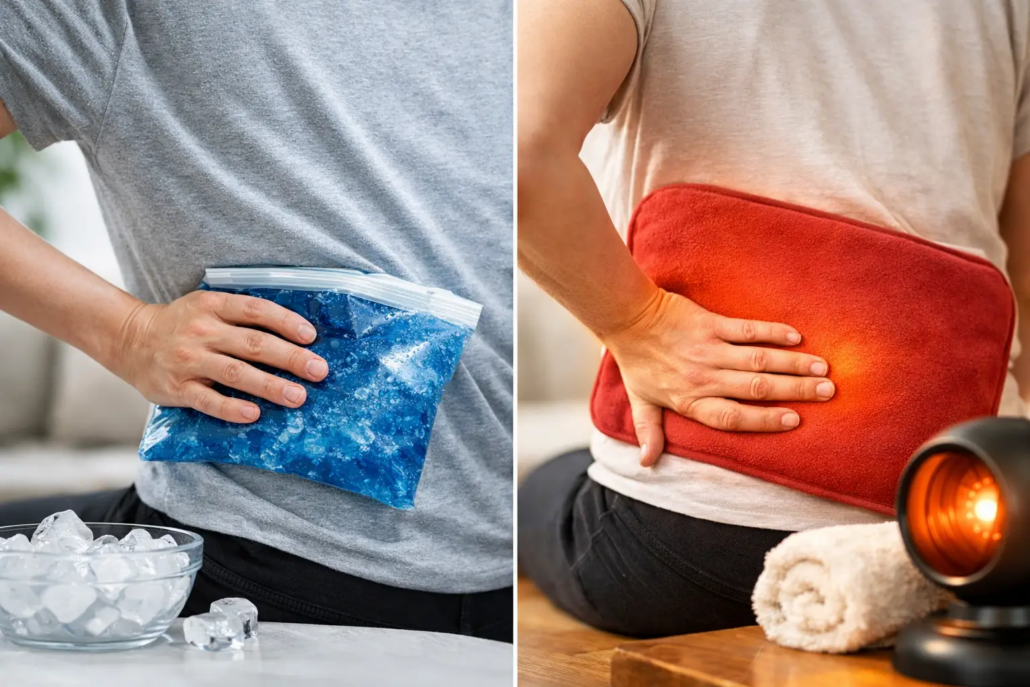
Ice or Heat for Sciatica? What Helps Most
That sharp, burning pain running from your low back into your hip or leg usually makes one question feel urgent: ice or heat for sciatica? When you are hurting, you do not want a long theory lesson. You want to know what may calm the pain now, what could make it worse, and when home care is no longer enough.
The short answer is that both can help, but they help in different ways. Ice is often better during the early, irritated phase when pain feels inflamed, sharp, or intense. Heat tends to work better when muscles are tight, guarded, or stiff around the area. Many people with sciatica actually do best when they use both at different times rather than treating them like an either-or choice.
Ice or heat for sciatica: which one should you start with?
If your sciatica flared suddenly, started after lifting, twisting, a workout, a long drive, or an accident, ice is usually the safer first move for the first 24 to 72 hours. Cold can help calm irritation and reduce the local inflammatory response around the tissues contributing to nerve irritation. It may also slightly numb the area, which can make severe pain more tolerable.
Heat is usually more helpful when the pain has settled into a lingering pattern of tightness, stiffness, aching, or muscle spasm. Sciatica often involves more than the nerve alone. The muscles in the low back, glutes, and hips can tighten up in response, and that tension can increase pressure and make movement more painful. Heat helps those muscles relax, improves circulation, and can make it easier to walk, stretch, or change positions.
So if the pain feels hot, sharp, and newly aggravated, start with ice. If it feels tight, stiff, and locked up, heat may give faster relief. If you are not sure, start with ice for a short session and see how your body responds.
Why sciatica pain does not always respond the same way
Sciatica is a symptom, not a single diagnosis. One person may have nerve irritation from a disc problem. Another may have pressure related to joint dysfunction, inflammation, muscle tension, pregnancy-related changes, or prolonged sitting posture. That is why a remedy that helps one person may do very little for someone else.
This is also why home care has limits. Ice and heat can help manage symptoms, but they do not correct the reason the sciatic nerve is being irritated. If the root issue involves spinal alignment, disc stress, soft tissue restriction, or poor movement mechanics, the pain may keep returning until that cause is addressed.
When ice is usually the better choice
Ice tends to help most when pain is recent, intense, and aggravated by activity. It is a practical first step after a sudden flare-up, after exercise that made symptoms worse, or after spending too long in one painful position. If your leg pain feels electric, burning, or sharply inflamed, cold may calm things down enough to help you move again.
Apply an ice pack wrapped in a thin towel for about 15 to 20 minutes at a time. Do not place ice directly on the skin. Then give the skin time to return to normal temperature before using it again. Several short sessions during the day are usually better than one very long session.
A common mistake is icing only where the pain travels, such as the calf or foot, while ignoring the source in the low back or glute area. Because sciatic pain often starts higher up, cold is usually most useful over the low back, upper buttock, or the area where symptoms seem to begin.
When heat is usually the better choice
Heat is often helpful when sciatica has become stubborn and your body feels guarded. Maybe your lower back feels rigid getting out of bed. Maybe your glutes tighten after sitting at your desk. Maybe the leg symptoms are milder, but the surrounding muscle tension is constant and exhausting.
In those situations, gentle heat can relax the soft tissues and make movement less painful. A heating pad or warm compress for 15 to 20 minutes is usually enough. Warm, not scorching, is the goal. Too much heat can irritate sensitive tissues, especially if inflammation is still active.
Heat is also useful before gentle stretching, walking, or prescribed exercises because it can improve comfort and flexibility. If you use heat and the area starts throbbing, feels more inflamed, or your leg pain becomes more intense, that is a sign heat may not be the right choice at that moment.
Can you alternate ice and heat for sciatica?
Yes, and for many people that works best. Alternating can be useful when you have both irritation and muscle guarding. For example, you might use ice after a pain flare or after activity, then use heat later when your back and hip muscles tighten up.
A simple approach is to use one method for 15 to 20 minutes, wait at least an hour or more, and then use the other if symptoms suggest it would help. You do not need a complicated schedule. What matters most is paying attention to your response. If one option consistently leaves you looser and less painful, that is the one to favor.
Some people also benefit from heat before activity and ice afterward. This can make sense if movement feels stiff at first but symptoms get more irritated later in the day.
What not to do when using ice or heat
Home care should feel soothing, not punishing. Do not fall asleep on a heating pad or ice pack. Do not apply either one directly to bare skin. Do not use extreme temperatures in an effort to force faster relief. More is not better here.
It is also wise to avoid staying planted in bed all day. Too much rest can make sciatica worse by increasing stiffness and reducing circulation. Short walks, gentle position changes, and guided movement are often better than complete inactivity.
If one method clearly worsens your pain, stop using it. That reaction can offer useful information about what your body needs right now.
Ice or heat for sciatica is only part of the picture
Temporary relief matters, especially when pain is disrupting sleep, work, driving, or exercise. But lasting improvement usually requires more than a hot pack or cold pack. Sciatica often improves best when treatment focuses on the source of nerve irritation and the movement patterns that keep aggravating it.
That may include chiropractic adjustments to improve spinal motion and alignment, soft tissue work to reduce muscular tension, traction or decompression strategies when disc involvement is suspected, and corrective exercises to improve posture and support the low back. When these therapies are combined thoughtfully, they can do more than dull symptoms. They can help reduce the mechanical stress feeding the problem.
At HealthPoint Chiropractic, this integrated approach is a big reason many patients get more complete relief than they would from a single therapy alone. If your sciatica keeps returning, that usually means your body needs more than symptom management.
When sciatica needs professional evaluation
If your symptoms are lasting more than a few days, becoming more frequent, or interfering with normal activities, it is time to get evaluated. The same is true if pain shoots below the knee, if sitting is getting harder to tolerate, or if you are changing the way you walk because of the discomfort.
Certain symptoms should not be brushed off or treated with home remedies alone. Seek prompt medical attention if you have significant leg weakness, numbness that is getting worse, loss of bowel or bladder control, or severe pain after a fall or auto accident.
Even when the situation is less urgent, early care can matter. Addressing sciatic pain before it becomes chronic often means faster progress and fewer setbacks.
A practical way to decide what to use today
If you need a simple rule, use ice for a fresh flare-up that feels inflamed and sharp. Use heat for stiffness, tightness, and muscle spasm. If your symptoms have elements of both, try each at different times and let your body tell you which one helps more.
And if neither gives more than brief relief, do not assume you just have to live with it. Sciatica has a cause, and causes can be evaluated and treated. The right home remedy can make today easier. The right care plan can make the next few months look very different.
Relief usually starts with one good decision, and sometimes that decision is simply getting the right set of hands and eyes on the problem.