
Top Benefits of Traction Therapy for Back Pain
A dull ache after a day at the desk is one thing. Pain that shoots into your leg, makes driving uncomfortable, interrupts sleep, or keeps you from your usual workouts is another. The top benefits of traction therapy matter most when spinal pressure, muscle guarding, or irritated nerves are limiting how you move and feel. For the right patient, this gentle, controlled treatment can be a useful part of a drug-free plan for relief and recovery.
Traction therapy is not a one-size-fits-all fix, and it is not simply “stretching the back.” It uses carefully directed pulling forces to create space and reduce stress in targeted areas of the spine. Depending on your symptoms, care may focus on the neck or the low back and may be combined with chiropractic adjustments, soft tissue treatment, massage, and corrective exercise.
How Traction Therapy Works
Your spine is built to move, absorb force, and protect sensitive nerves. But prolonged sitting, poor posture, repetitive strain, sports injuries, age-related changes, and auto accidents can place added stress on spinal joints, discs, and surrounding muscles. When muscles tighten to protect a painful area, that tension can further restrict movement.
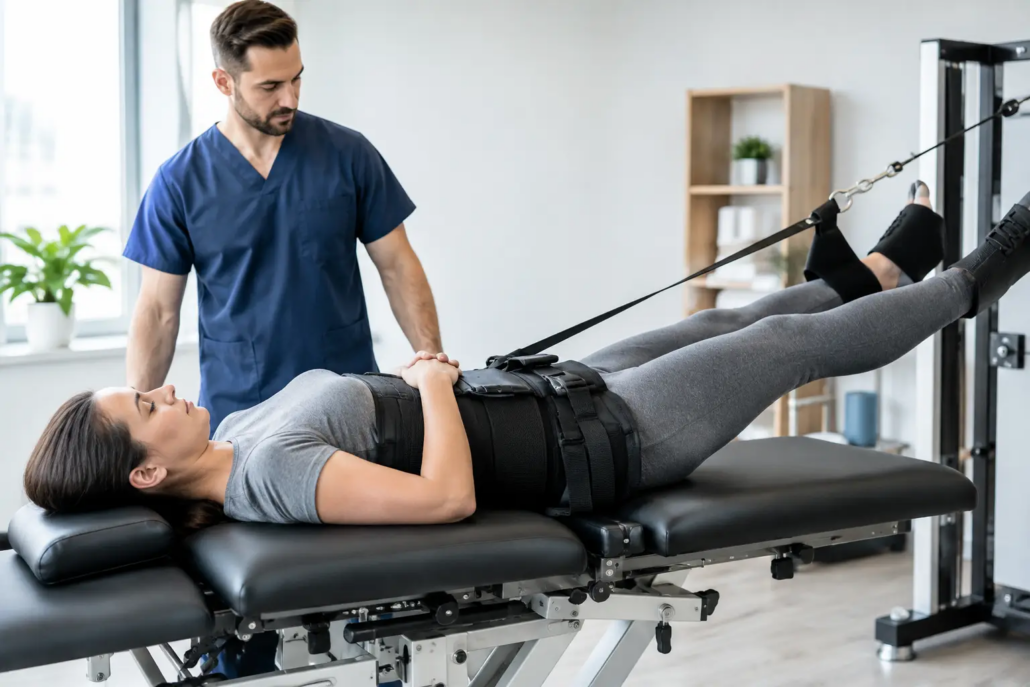
During traction therapy, a provider applies a measured, comfortable pulling force to the cervical spine or lumbar spine. Some approaches use intermittent traction, alternating between gentle pull and release. Others use sustained traction for a prescribed period. The goal is not to force the spine into position. It is to reduce compression and encourage relaxed, more natural movement.
The exact approach depends on the person in front of us. Someone with neck stiffness and headaches after a collision needs a different plan from someone whose low back pain worsens after sitting all day. A careful examination helps determine whether traction is appropriate and how it should be used.
Top Benefits of Traction Therapy
It may reduce pressure around irritated nerves
One of the most meaningful benefits of traction therapy is its potential to reduce pressure on sensitive spinal structures. When disc changes, joint irritation, or muscle tightness narrow the space around a nerve, symptoms can include tingling, numbness, burning pain, or pain that travels into an arm or leg.
Gentle traction may help create temporary space within the spine and reduce mechanical stress around those tissues. For people with sciatica-like symptoms or pain that radiates from the neck into the shoulder and arm, that reduction in pressure can make daily movement more manageable. Results vary, but the right treatment plan can help calm symptoms while the body works toward better function.
It can ease muscle tension and guarding
Pain often creates a protective response: muscles tighten around the irritated area. While that response is understandable, persistent guarding can leave your neck or back feeling stiff, sore, and difficult to move.
The slow, controlled nature of traction can encourage those muscles to relax. Many patients describe a sense of relief during or shortly after treatment, particularly when tension has built up from computer work, commuting, stress, or repetitive activity. When appropriate, combining traction with massage therapy or soft tissue care may further address tight muscles that are contributing to discomfort.
It may improve comfortable range of motion
Stiffness changes how you live. You may turn your whole body instead of checking a blind spot, avoid bending to tie your shoes, or skip exercise because twisting feels unpredictable. When pain and guarding decrease, range of motion may improve as well.
Traction is not a substitute for movement training, but it can help prepare the body for it. After symptoms settle enough to move more comfortably, guided rehabilitation and corrective exercise can help rebuild strength, control, and confidence. This matters because lasting improvement usually requires more than passive treatment alone.
It supports a non-surgical, drug-free care plan
Many people in Fort Lauderdale want options that do not begin with medication or invasive procedures. Traction therapy can be part of a conservative approach for certain neck and back conditions, especially when paired with a complete evaluation and active rehabilitation.
That does not mean surgery or medication are never appropriate. Severe injuries, progressive neurological changes, fractures, infections, or other serious conditions require prompt medical attention and may need a different level of care. But for many musculoskeletal problems, a personalized non-surgical plan is a reasonable place to start.
It can complement chiropractic adjustments
An adjustment may help restore joint motion and reduce stiffness. Traction can address a different part of the problem by gently unloading the spine and helping tight tissues relax. Used together when clinically appropriate, these therapies can be more helpful than relying on a single treatment alone.
At HealthPoint Chiropractic, treatment is built around the cause and pattern of your symptoms rather than a standard routine. Some patients benefit from traction before an adjustment because it helps them relax. Others do better with traction, rehabilitation, and home-care guidance after an adjustment. The order, frequency, and techniques should be based on your examination findings and response to care.
It may make daily activities easier
The value of treatment is not limited to how your back feels on the table. Real progress shows up when you can sit through a meeting with less discomfort, sleep in a more comfortable position, pick up groceries without fear, or return to the gym with a better plan.
Traction therapy may help reduce the pain barriers that make these activities difficult. Still, improved function usually comes from a broader strategy: better posture habits, appropriate movement, strengthening, recovery time, and treatment that responds to changes in your symptoms.
Who May Benefit From Traction Therapy?
Traction may be considered for people with certain types of neck pain, low back pain, disc-related symptoms, muscle spasm, stiffness, posture-related strain, or radiating pain associated with nerve irritation. It can also be useful for some patients recovering from auto accident injuries, including whiplash-related neck discomfort, after a thorough assessment.
Symptoms alone do not tell the whole story. Two people can both have low back pain but need very different care. One may have tight hip muscles and poor sitting mechanics, while another may have a disc-related pattern with leg symptoms. Imaging, medical history, neurological findings, and how your body responds to movement all help shape a safe recommendation.
When Traction May Not Be the Right Choice
A responsible treatment plan includes knowing when not to use a therapy. Traction may be inappropriate or require medical clearance for people with spinal instability, a recent fracture, severe osteoporosis, active spinal infection, certain cancers, or some inflammatory conditions. Previous spinal surgery, pregnancy, and significant vascular or neurological concerns also call for individualized guidance.
Seek urgent medical attention for new bowel or bladder changes, numbness in the groin area, significant weakness, loss of coordination, fever with severe back pain, or pain after a serious accident. These symptoms should not be managed with routine traction or a wait-and-see approach.
Even when traction is appropriate, more force is not better. Treatment should feel controlled and tolerable. Tell your provider right away if you experience worsening pain, dizziness, unusual numbness, or symptoms that travel farther into an arm or leg.
What to Expect During Care
Your first visit should begin with a conversation, not a machine. Your provider should ask where the pain starts, what makes it better or worse, whether symptoms travel, how long the problem has lasted, and how it affects work, sleep, driving, and activity. An examination helps identify movement restrictions, muscle tension, posture patterns, and signs that warrant referral.
If traction is recommended, you will be positioned comfortably and the treatment settings will be tailored to the affected region and your tolerance. Sessions are often short, and your plan may also include hands-on care, heat or cold therapy, massage, or specific exercises. The goal is to make each phase of care support the next one, from relief to restored movement to stronger long-term habits.
If neck or back pain is keeping you from working, resting, or moving normally, you do not have to guess which therapies may help. A thoughtful evaluation can clarify whether traction therapy belongs in your recovery plan and give you a practical path toward feeling better today and moving better tomorrow.





