
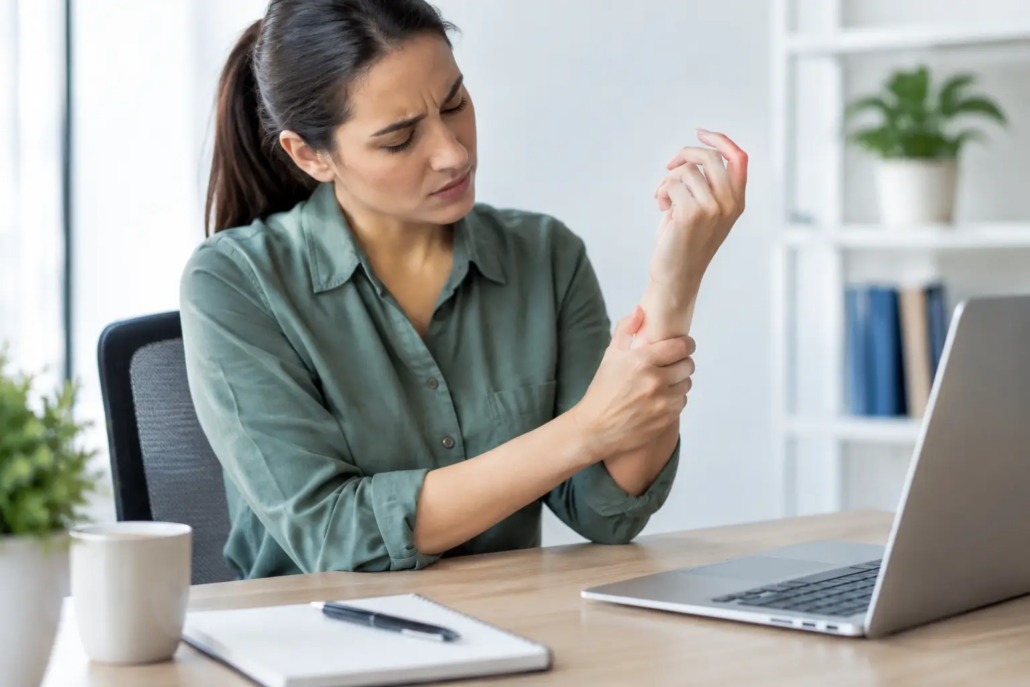
Your Guide to Repetitive Strain Injuries
That ache in your wrist after a long day at the keyboard, the tightness climbing from your shoulders into your neck, or the elbow pain that appears halfway through a tennis match is not always something to push through. This guide to repetitive strain injuries explains why small, repeated movements can create real pain, how to recognize the warning signs early, and what you can do to recover without simply masking symptoms.
Repetitive strain injuries, often called RSIs, affect people whose work, exercise, commute, or hobbies require the same motion or position again and again. They are common among office workers, drivers, tradespeople, athletes, musicians, and anyone spending hours on a phone or computer. In Fort Lauderdale, long commutes, active weekends, and desk-based work can all add up to the same problem: tissues that never get enough time or support to recover.
What Is a Repetitive Strain Injury?
A repetitive strain injury develops when muscles, tendons, nerves, or joints are overloaded by repeated motion, force, awkward posture, or too little recovery. It does not always begin with a dramatic injury. More often, irritation builds gradually. A tight forearm becomes a sore wrist. A stiff neck becomes recurring headaches. A mild twinge in the shoulder starts limiting sleep, work, or exercise.
The term covers a range of conditions, including tendon irritation, carpal tunnel syndrome, tennis elbow, golfer’s elbow, shoulder impingement, and some posture-related neck and upper-back problems. The exact diagnosis matters because the best treatment depends on the tissues involved. Still, the underlying pattern is often similar: the body is being asked to handle more repetition or load than it can comfortably tolerate.
Pain is not always felt where the problem began. For example, a wrist complaint may be connected to tight forearm muscles, shoulder weakness, or a workstation that keeps the neck and upper back under constant tension. That is why lasting care should look beyond the painful spot alone.
Early Signs You Should Not Ignore
RSIs can be easier to treat when addressed early. Many people wait because the discomfort comes and goes, or because it improves after a weekend away from work. But recurring pain is useful information. It is your body asking for a change before irritation becomes more persistent.
Common early symptoms include aching, burning, stiffness, tingling, numbness, weakness, swelling, or a feeling of heaviness in the affected area. You may notice that your grip feels less reliable, your hand falls asleep at night, or your neck feels locked after looking down at a screen. Symptoms that reliably return during a particular task are especially worth attention.
Get prompt medical evaluation for sudden severe pain, a visible deformity, major swelling, loss of strength, pain after a fall or collision, or numbness that is worsening or persistent. Chest pain, shortness of breath, facial weakness, or sudden one-sided weakness require emergency care. Not every arm, neck, or shoulder symptom is an RSI, so an accurate assessment is essential.
Why Repetitive Strain Injuries Happen
Repetition is only one part of the equation. Typing for several hours may not bother one person but may trigger symptoms in another. The difference can come down to posture, technique, workstation setup, previous injuries, sleep, stress, conditioning, and how quickly activity increased.
A laptop used at the kitchen table, for example, often places the screen too low and the shoulders too far forward. The hands may work at an awkward angle while the neck stays bent for long periods. Add tight chest muscles, weak upper-back muscles, and few movement breaks, and the same everyday task can overload the body.
Athletic RSIs follow a similar pattern. A runner who suddenly adds mileage, a golfer working on a powerful swing, or a pickleball player adding several matches a week may develop tendon or joint irritation when training rises faster than recovery capacity. The answer is not always complete rest. In many cases, the better approach is modifying the aggravating activity while restoring mobility, strength, and control.
A Practical Guide to Repetitive Strain Injuries at Work and Home
The goal is not perfect posture held rigidly all day. Bodies generally do better with regular movement than with one supposedly ideal position maintained for hours. Set up your environment to reduce unnecessary strain, then change positions often.
Keep your monitor near eye level, with the top of the screen at or just below eye height. Position the keyboard and mouse close enough that your elbows can stay near your sides and your shoulders can relax. Your feet should have stable support, and your chair should allow your hips and back to feel supported. If you work primarily from a laptop, a separate keyboard and mouse can make a meaningful difference.
Short movement breaks are more useful than one long stretch session at the end of the day. Stand up, walk briefly, gently move your shoulders, open and close your hands, and look away from the screen every 30 to 60 minutes. The best schedule is the one you will actually follow. A reminder on your phone or calendar can help turn breaks into a habit.
Pay attention to force as well as position. Many people grip a mouse, steering wheel, phone, or exercise equipment harder than necessary. Lightening your grip, switching hands when practical, using voice-to-text for some messages, or dividing repetitive tasks into shorter blocks can reduce cumulative stress.
What Recovery Usually Requires
If pain has been present for more than a few days, returns repeatedly, or interferes with sleep and normal activities, professional care can help identify what is driving it. Effective treatment is not just about reducing pain in the moment. It should help you move better, tolerate activity more comfortably, and lower the chance that the problem keeps returning.
A thorough exam can assess posture, joint motion, muscle tension, strength, nerve irritation, and movement patterns. Depending on your condition, a personalized plan may include chiropractic adjustments to address restricted spinal or joint movement, soft tissue treatment or massage therapy for tight muscles, and corrective exercise to rebuild support where it is needed.
Some patients benefit from heat or cold therapy for symptom relief, while others need traction, spinal decompression, or guided rehabilitation when neck or back involvement is contributing to arm, shoulder, or hand symptoms. The right combination depends on the diagnosis. For instance, an irritated tendon may need gradual loading rather than aggressive stretching, while nerve-related symptoms may require attention to the neck, wrist, or both.
At HealthPoint Chiropractic, integrated care can combine hands-on treatment with rehabilitation and practical posture guidance under one plan. This approach is designed to address the mechanical factors behind repetitive strain, not merely offer a temporary workaround for pain.
Do Not Return to Full Activity Too Fast
Feeling better after a few days does not always mean the tissue is ready for the same workload that caused the problem. A common mistake is going from rest directly back to a full day of typing, heavy lifting, or intense training. Symptoms then flare again, which can feel discouraging but usually signals that the return was too abrupt.
A gradual progression is more reliable. Reduce the activity that provokes symptoms, then increase it in manageable steps as mobility, strength, and comfort improve. If pain becomes sharp, symptoms spread, numbness increases, or discomfort lasts well into the next day, the workload may need to be adjusted.
Recovery also depends on the basics. Sleep supports tissue repair. Hydration, regular movement, and sufficient protein can support active people during rehabilitation. Stress can increase muscle tension and make pain feel more intense, so a realistic plan should account for work demands and life outside the clinic, not just exercises on paper.
When It Is Time to Get Help
You do not need to wait until pain becomes severe to seek care. If discomfort is changing the way you work, drive, sleep, exercise, or use your hands, it deserves attention. The sooner the contributing factors are identified, the easier it can be to make targeted changes and prevent a minor irritation from becoming a long-term limitation.
Your body is built to move, work, and stay active. When repeated movement starts causing pain, the answer is not always to stop doing what you enjoy. With a clear diagnosis, thoughtful activity changes, and a plan that supports recovery, you can move toward relief with more confidence.





