
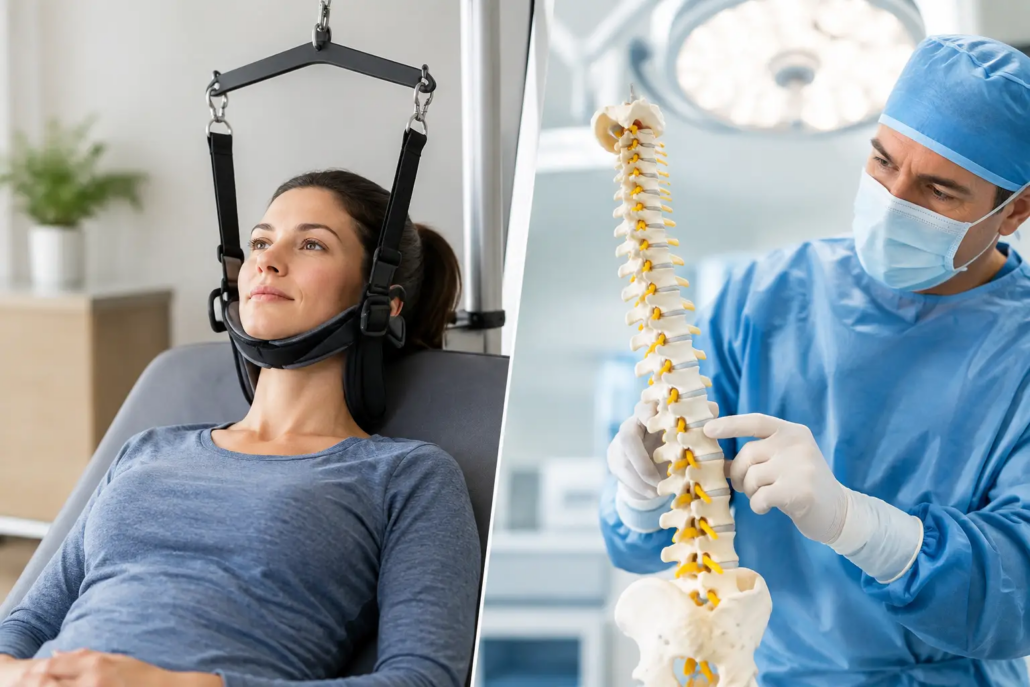
Traction Versus Surgery for Back and Neck Pain
When pain shoots down your leg, wakes you at night, or makes turning your head feel impossible, the decision can feel urgent. Traction versus surgery is not a simple contest between two treatments. The right path depends on what is causing your symptoms, whether nerves are affected, how much function you have lost, and how your body responds to conservative care.
For many Fort Lauderdale patients with back pain, neck pain, sciatica, disc-related discomfort, or whiplash, a personalized non-surgical plan can provide meaningful relief and restore movement. But there are also situations where a surgical evaluation is the responsible next step. Understanding the difference helps you make decisions based on your health, not fear or frustration.
What Spinal Traction Is Designed to Do
Spinal traction is a controlled therapy that gently stretches the spine. Depending on the area being treated, it may create a small amount of space between vertebrae, reduce pressure on irritated structures, and help tight muscles relax. Mechanical traction, manual traction, and spinal decompression are related approaches, but the equipment, force, positioning, and treatment goals can vary.
For a patient with lower back pain and leg symptoms, traction may be used as part of a broader plan to reduce irritation while improving mobility and core support. For neck pain, it may help ease stiffness or radiating arm symptoms when appropriate. It is not a one-size-fits-all solution, and it should not be treated as one.
At HealthPoint Chiropractic, traction is typically considered alongside chiropractic adjustments, soft tissue treatment, massage therapy, corrective exercise, posture guidance, and rehabilitation. This integrated approach matters because pressure on a spinal structure is rarely the only issue. Muscle guarding, poor movement habits, weakness after injury, and limited flexibility can all continue to feed the pain cycle.
Traction Versus Surgery: The Key Difference
The central difference is the goal and level of intervention. Traction is a non-invasive, conservative treatment intended to reduce symptoms and support recovery without altering the spine surgically. Surgery physically changes or repairs anatomy, such as removing part of a disc, relieving pressure around a nerve, stabilizing unstable segments, or addressing severe structural damage.
Neither option is automatically better. Surgery can be life-changing when there is significant nerve compression, spinal instability, certain fractures, or progressive loss of strength. Traction can be a reasonable part of care when symptoms are present but there is no urgent sign that a nerve or spinal structure requires surgical correction.
The question is not simply, “Can traction replace surgery?” A better question is, “Is conservative treatment safe and likely to help in my specific situation?” That answer requires a careful history, physical examination, and, when indicated, imaging and coordination with other medical providers.
When a Non-Surgical Approach May Be Reasonable
Many common spinal complaints improve with time and conservative care. This includes many cases of muscle strain, posture-related pain, uncomplicated neck pain, some disc bulges, mild to moderate sciatica, and injury-related stiffness. A provider may recommend a trial of non-surgical treatment when your symptoms are stable, your neurological exam does not show serious deficits, and you can still participate in daily activities with appropriate modifications.
A well-designed plan does more than passively stretch the spine. It should help you move better, tolerate work and exercise more comfortably, and reduce the factors that may be aggravating the area. For an office worker, that might include workstation and posture changes. For an athlete, it may involve targeted mobility and strength work. For someone recovering from an auto accident, treatment may focus on restoring normal movement gradually while addressing muscle tension and soft tissue irritation.
Progress is the real measure. Some patients notice relief early, while others improve gradually over several weeks. If you are gaining motion, sleeping better, needing less medication, or returning to normal activity with less pain, conservative care may be doing its job.
When Surgery May Need to Be Considered
Surgery is generally not the first choice for uncomplicated back or neck pain, but it should never be dismissed when warning signs are present. A prompt medical or surgical evaluation may be needed if you have worsening muscle weakness, loss of coordination, severe or progressive numbness, or symptoms that suggest major nerve involvement.
Emergency evaluation is especially important for new bowel or bladder control problems, numbness in the groin or saddle area, severe weakness in both legs, fever with severe spinal pain, or pain after significant trauma. These symptoms are not situations to manage with traction, exercise, or waiting to see if things improve.
Surgery may also be appropriate when imaging and symptoms clearly match, pain remains disabling after an adequate course of conservative treatment, and a surgeon believes a procedure has a reasonable chance of improving function or preventing further neurological decline. Even then, the decision should be personal and well-informed. Ask what the procedure is intended to fix, what recovery will involve, what alternatives remain, and what outcomes are realistic.
The Trade-Offs to Discuss Before Choosing
Traction and rehabilitation generally involve less risk and less downtime than surgery. They can be adjusted as your symptoms change, and they may help you avoid unnecessary procedures when your condition is likely to respond to conservative care. The trade-off is that improvement is not always immediate, and traction cannot correct every structural problem.
Surgery may offer direct relief when a compressed nerve or unstable spinal segment is truly driving severe symptoms. However, every procedure carries risks, including infection, bleeding, anesthesia complications, scar tissue, persistent pain, and a recovery period that can affect work and family responsibilities. Surgical outcomes can be excellent for the right diagnosis, but no procedure guarantees complete relief.
This is why a thoughtful care plan matters. The most productive conversation is not about choosing the least intimidating option or the fastest-sounding fix. It is about matching treatment intensity to the condition in front of you.
What to Expect From a Conservative Care Evaluation
A thorough chiropractic and rehabilitative evaluation should begin with your story. When did the pain start? Did it follow a car accident, a lifting injury, a sports activity, or months of sitting at a desk? Does it travel into an arm or leg? Are you noticing numbness, weakness, headaches, dizziness, or changes in balance?
Your provider should then assess movement, posture, reflexes, strength, sensation, and areas of tenderness or restriction. If traction is appropriate, the plan should explain why it is being recommended, what other treatments will support it, and how progress will be measured. You should also know what changes would require referral for medical imaging or surgical consultation.
Conservative care is not about ignoring a serious problem. It is about giving your body an appropriate opportunity to recover while watching closely for signs that the plan needs to change.
A Practical Path Forward for Persistent Pain
If you have been told you have a disc issue or are wondering whether surgery is your only option, start with a clear diagnosis and an honest discussion of your symptoms. Bring prior imaging reports, medication information, and details about treatments you have already tried. Be specific about what pain prevents you from doing, whether that is driving, working, sleeping, walking, or exercising.
For many people, a focused course of non-surgical care can clarify the next step. If you improve, you can continue building strength and healthier movement patterns. If you do not improve, or if neurological symptoms worsen, you have useful information to take into a medical or surgical consultation.
You do not have to choose based on a frightening scan result alone. The best next step is the one that protects your nerve function, respects your goals, and gives you a realistic path back to a more comfortable, active life.





