
A Guide to Spinal Decompression for Back Pain
A guide to spinal decompression should start with one clear point: this treatment is not a quick fix or a replacement for a proper examination. For the right patient, however, non-surgical spinal decompression can be a comfortable, drug-free way to reduce pressure on irritated spinal structures and support recovery from certain types of back or neck pain.
If pain shoots down your leg, interrupts your sleep, makes sitting at work difficult, or limits the activities you enjoy, the goal is not simply to make you feel better for a few hours. The goal is to understand what is driving the problem and create a plan that helps your body move, heal, and function with less pain.
What Is Spinal Decompression?
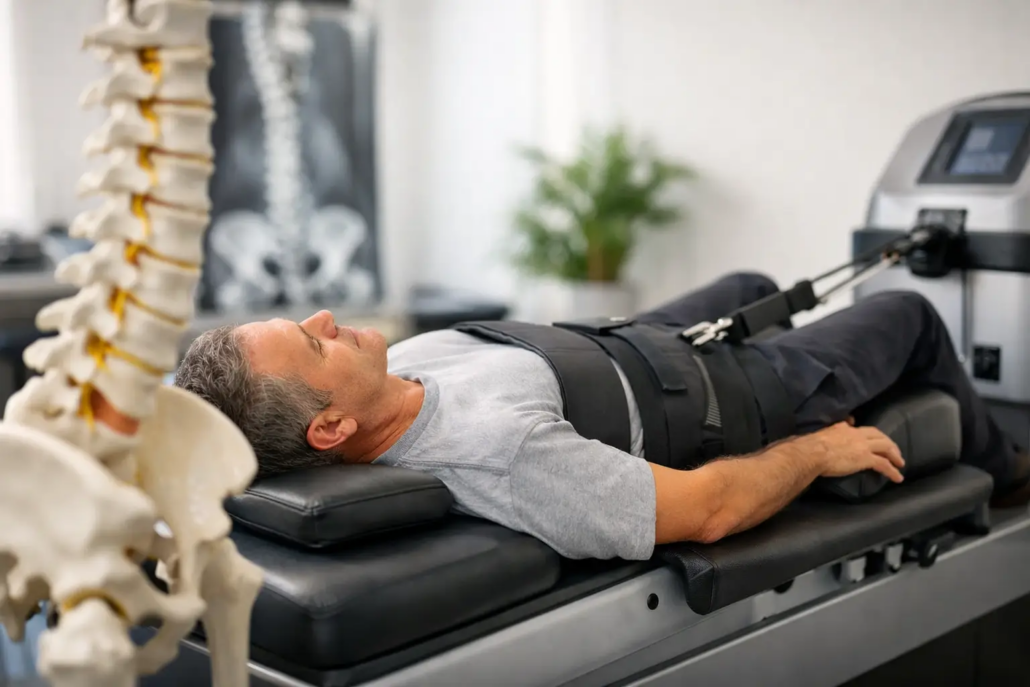
Spinal decompression is a form of motorized traction therapy. You lie comfortably on a specialized treatment table while a controlled, gentle pulling force is applied to a specific area of the spine. The treatment alternates between stretching and relaxation phases rather than holding one constant pull.
This controlled movement is designed to reduce pressure within spinal discs. Discs are the cushion-like structures between the bones of your spine. When a disc is irritated, bulging, herniated, or degenerating, it may affect nearby nerves and cause pain in the back, neck, leg, arm, hip, or shoulder.
By creating a small amount of space between spinal segments, decompression may help reduce mechanical stress on the disc and surrounding tissues. It may also support the movement of oxygen, water, and nutrients into the disc area. For many patients, the session feels like a mild stretch and is more relaxing than they expect.
Spinal decompression is often part of a broader conservative care plan. At HealthPoint Chiropractic, that may include chiropractic adjustments, soft tissue treatment, massage therapy, corrective exercise, posture guidance, and rehabilitation. Combining therapies can matter because a painful disc problem rarely affects only the disc. Muscles may tighten, movement patterns may change, and the surrounding joints may become restricted as your body tries to protect itself.
Who May Benefit From Spinal Decompression?
A careful evaluation determines whether decompression is appropriate. It is commonly considered for people with disc-related pain, especially when symptoms have not improved with rest, home care, or basic treatment alone.
Patients may be candidates when they have herniated or bulging discs, sciatica, degenerative disc changes, certain cases of spinal stenosis, chronic neck pain, or low back pain that travels into the buttock or leg. Some people seek care after a car accident, when whiplash and altered posture have aggravated a pre-existing disc issue. Others are office workers, drivers, athletes, or active adults whose pain has gradually built up from repetitive stress.
The location and pattern of symptoms matter. A dull ache after yard work is different from numbness traveling down one leg. Pain that worsens with sitting, coughing, bending, or lifting can sometimes point toward disc involvement, but symptoms alone do not provide a diagnosis. A provider should assess your range of motion, strength, reflexes, posture, health history, and any imaging that may be available.
When Decompression May Not Be the Right Choice
Non-surgical decompression is not appropriate for everyone. Certain conditions require a different approach, more medical testing, or urgent medical attention. Examples can include fractures, spinal infection, some tumors, severe osteoporosis, certain types of surgical hardware, or conditions that make traction unsafe.
New bowel or bladder problems, numbness in the groin area, rapidly worsening weakness, fever with severe spinal pain, or significant pain after a major fall or collision should not be ignored. These symptoms may require immediate medical evaluation rather than routine conservative treatment.
Pregnancy, severe joint instability, advanced arthritis, and prior spinal surgery do not automatically rule out care, but they do change the conversation. The right treatment always depends on the individual. A responsible provider will explain when decompression makes sense, when it does not, and whether a referral is needed.
What Happens During a Spinal Decompression Visit?
Your first visit should focus on answers, not assumptions. Before recommending treatment, your provider should discuss your symptoms, daily limitations, prior injuries, work demands, activity level, and health history. The examination helps identify whether your pain is likely related to the disc, joints, muscles, nerves, or a combination of these factors.
During a decompression session, you remain clothed and are secured with comfortable supports around the pelvis or upper body, depending on the region being treated. The table applies a computer-controlled traction pattern tailored to the treatment area. A typical session may last around 20 to 30 minutes, although appointment length can vary when additional therapies are included.
You should not need to push through sharp pain during treatment. Mild stretching or temporary soreness can occur, particularly if tissues have been guarded and inflamed for a long time. Tell your provider how you feel during and after each session so the treatment plan can be adjusted appropriately.
Many patients receive a series of visits rather than one treatment. Disc and nerve irritation usually develops over time, and meaningful improvement often takes consistency. The recommended frequency depends on your condition, symptom severity, response to care, and whether you are also performing rehabilitation exercises.
Why Exercise and Posture Matter After Treatment
Decompression can reduce pressure, but lasting progress also depends on what happens between appointments. If weak core muscles, poor hip mobility, prolonged sitting, repetitive lifting, or forward-head posture continue to overload the spine, symptoms can return.
That is why corrective exercise and rehabilitation are often included in a decompression plan. The exercises are not meant to be complicated. They are selected to help restore movement, improve stability, and teach your body to tolerate daily activities with less strain. A person who sits at a Fort Lauderdale desk job may need a different strategy than someone recovering from an auto accident or training for a sport.
Small adjustments can make a meaningful difference. Taking movement breaks during long workdays, setting up your monitor at eye level, using proper lifting mechanics, and avoiding long periods in one position can reduce repeated stress on the spine. Your provider may also recommend heat, cold therapy, or specific home stretches based on the stage of your recovery.
What Results Can You Expect?
Some patients notice relief early in a treatment plan. Others improve more gradually as inflammation settles, mobility returns, and the body adapts to healthier movement patterns. There is no honest way to promise the same result for every person.
The best outcomes tend to come from matching the treatment to the actual cause of symptoms and following through with the full care plan. If decompression is paired with appropriate chiropractic care, soft tissue work, rehabilitation, and practical home guidance, it may offer a more complete path than relying on passive treatment alone.
It is also fair to consider the trade-offs. Decompression requires time, multiple appointments, and an active role from the patient. It may not eliminate the need for medical care, injections, or surgery in every case. Yet for many people with appropriate conditions, it offers a non-invasive step worth considering before more aggressive options.
Questions to Ask Before Starting Care
When choosing a provider, ask what they believe is causing your pain, how they determined that, and why decompression is being recommended for you. Ask how progress will be measured beyond pain alone, such as improvements in walking, sleeping, sitting, work tolerance, strength, or mobility.
You should also ask what therapies will accompany decompression and what you can do at home to protect your progress. A personalized plan should feel clear, realistic, and connected to the activities that matter most in your life.
Back and neck pain can make even ordinary routines feel uncertain. The right next step is a thorough evaluation that gives you clarity, options, and a plan built around helping you return to comfortable movement with confidence.